The Life and Career of Atsuko Remar: From Actress to Public Figure
June 18, 2026
Who Is Kelly Anne Welbes Abagnale? Everything You Need to Know
June 21, 2026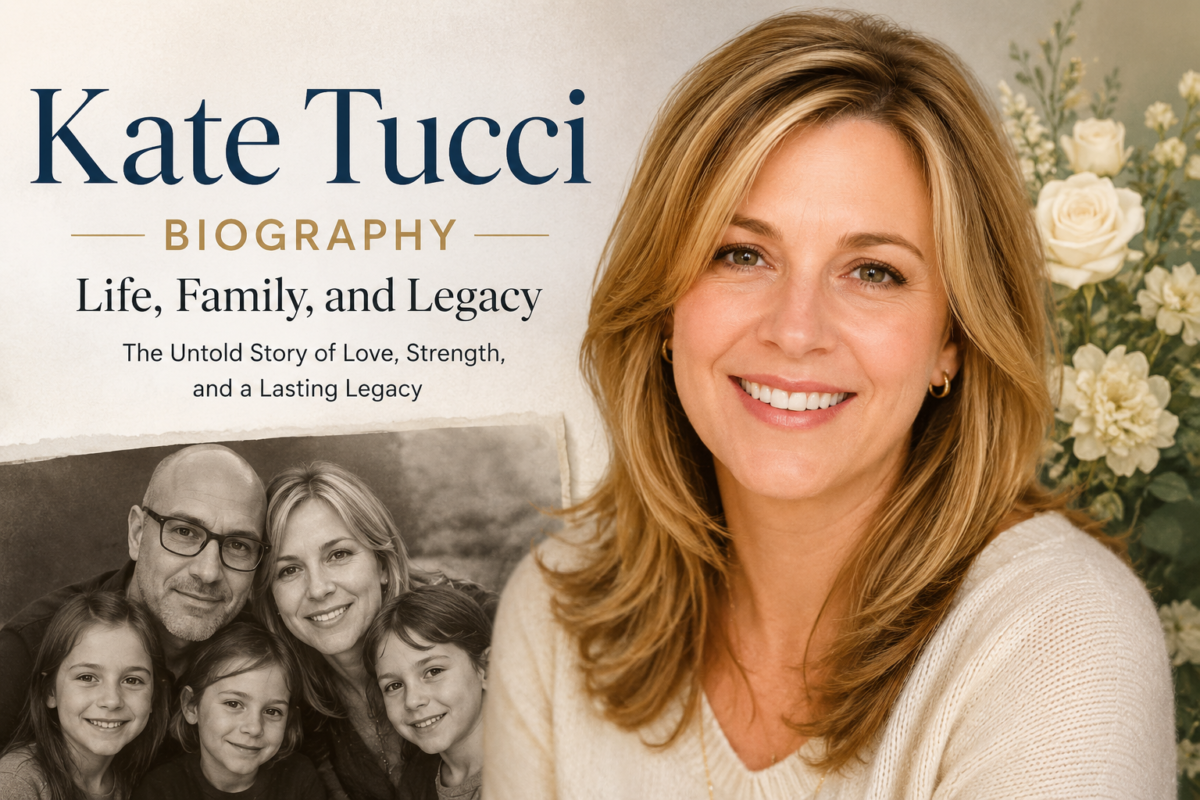
Kate Tucci’s name is most often encountered in the shadow of a famous one. Search for her online and the first association is usually immediate: she was the first wife of Stanley Tucci, the acclaimed actor, filmmaker, author, and food storyteller whose career has stretched from independent cinema to global franchises. But reducing Kate Tucci to a footnote in a celebrity biography misses the deeper reason people continue to search for her story. Her life sits at the intersection of love, family, grief, illness, privacy, and legacy — themes that feel intensely human precisely because they are not manufactured for public attention.
Born Kathryn Louise Spath, Kate Tucci lived most of her life away from the spotlight. She was not a Hollywood personality in the modern sense. She did not build a public brand, court media attention, or turn personal life into performance. Yet her presence became part of a larger public narrative because of the man she married, the family they built, and the loss that reshaped that family after her death from breast cancer in 2009. Stanley Tucci has spoken over the years about grief, parenting, illness, food, and rebuilding life after tragedy, and in those reflections Kate remains quietly but powerfully present.
Her biography is therefore not simply the story of “Stanley Tucci’s first wife.” It is a story about how private lives become public memory, how families carry loss forward, and how a person’s influence can endure even when much of their life remains respectfully undocumented. Kate Tucci’s legacy is not measured by fame. It is measured by the people she loved, the children she raised, and the way her absence continues to reveal the depth of her presence.
Who Was Kate Tucci?
Kate Tucci, born Kathryn Louise Spath, was widely known as the first wife of Stanley Tucci. Public records and biographical references identify her as Kathryn Louise Spath Tucci, born in 1962 and passing away in 2009. She married Stanley Tucci in 1995, and their marriage lasted until her death.
Because Kate lived a largely private life, many details about her early years, education, and professional identity are not documented with the same clarity as those of public figures. This is important to acknowledge. In an online environment where celebrity-adjacent biographies are often padded with speculation, the most trustworthy approach is to separate confirmed facts from assumptions.
What is clear is that Kate became part of a blended family life with Stanley Tucci. The couple had three children together: twins Isabel and Nicolo, born in 2000, and Camilla, born in 2002. Kate also had children from a previous marriage, and Stanley helped raise them as part of the family unit.
Her public identity is closely tied to family rather than career headlines. That does not make her story smaller. In many ways, it makes it more meaningful. Kate represents the countless people whose impact is felt most deeply in private rooms rather than public stages — in homes, kitchens, school routines, family rituals, and the emotional architecture of a household.
Early Life and Private Background
Kate Tucci was not a celebrity in her own right, and that privacy shapes the way her biography should be understood. Unlike actors, authors, politicians, or business leaders, she did not leave behind a public archive of interviews, speeches, press tours, or professional profiles. Her life before her marriage to Stanley Tucci remains mostly outside the public record.
This absence of detail has led some online sources to overstate what is known. Many celebrity biography pages present uncertain claims as fact, especially about education, career, wealth, or personal history. A careful biography of Kate Tucci should resist that temptation. The lack of public information is not a flaw in her story; it is part of the story.
Kate belonged to a generation that lived before social media turned private identity into searchable content. Her life unfolded in a world where family photographs were not automatically public, personal milestones were not turned into posts, and ordinary acts of care were not monetized into visibility. That context matters. It helps explain why so much of what people want to know about her remains limited.
The result is a biography built around confirmed anchors: her marriage, her children, her battle with breast cancer, and the legacy reflected through Stanley Tucci’s later interviews and writing. Rather than inventing a fuller public persona, the more honest approach is to recognize Kate as someone whose significance came through intimate influence, not public performance.
Marriage to Stanley Tucci
Kate Tucci married Stanley Tucci in 1995. At the time, Stanley was already an established actor with a growing reputation for intelligence, precision, and versatility. His career would later include acclaimed performances in films such as The Devil Wears Prada, Julie & Julia, The Lovely Bones, Spotlight, and The Hunger Games, along with work as a director, writer, and food documentarian.
Their marriage lasted 14 years, ending with Kate’s death in 2009. During those years, Stanley’s public career continued to rise, but the family life he shared with Kate remained relatively protected. That privacy now gives their relationship a certain dignity in hindsight. It was not a marriage lived for cameras. It was a marriage that existed behind the visible machinery of Hollywood.
Kate’s role in Stanley Tucci’s life became more publicly understood only after her death, as he began speaking about grief and the emotional complexity of losing a spouse. In interviews, he has described the lasting difficulty of her loss and the reality that grief does not simply end with time.
Their marriage also shaped the emotional foundation of Stanley’s later public identity. Today, he is not only known as an actor but as a cultural figure associated with food, family, memory, and resilience. Those themes are inseparable from the personal experiences that formed him, including his life with Kate and the grief that followed her passing.
Kate Tucci as a Mother
The most important part of Kate Tucci’s legacy is her role as a mother. She and Stanley Tucci had three children together: Isabel, Nicolo, and Camilla. Stanley is now the father of five children in total, including two younger children with his second wife, Felicity Blunt.
Kate’s children were still young when she died. Twins Isabel and Nicolo were born in 2000, and Camilla was born in 2002, meaning they were children when they lost their mother in 2009. That fact gives her story much of its emotional weight. The loss of a parent during childhood is not a single event; it becomes a lifelong presence that changes shape over time.
Stanley Tucci has generally kept his children out of the spotlight, a choice that reflects a clear boundary between public career and private family. That restraint is significant. In an era when celebrity children often become media subjects before they can consent, the Tucci family’s privacy suggests an effort to protect normalcy.
Kate’s influence on her children is not publicly available in detail, and it should not be treated as public property. But it is reasonable to understand her legacy through the family structure she helped create. The routines, values, emotional bonds, and memories formed during early childhood often endure long after a parent is gone. In that sense, Kate’s motherhood remains central to her biography.
Her Battle With Breast Cancer
Kate Tucci died from breast cancer in 2009. Multiple public sources, including reports on Stanley Tucci’s later reflections, identify breast cancer as the cause of her death. She was 47 years old.
Her illness became an important part of Stanley Tucci’s later public conversations about cancer, fear, and caregiving. Years after Kate’s death, Stanley faced his own cancer diagnosis. He was diagnosed with cancer at the base of his tongue in 2017 and underwent difficult treatment, including radiation and chemotherapy. In later interviews, he explained that his experience watching Kate suffer through cancer made him hesitant and frightened when confronting his own treatment.
This connection between Kate’s illness and Stanley’s later health crisis gives her story broader significance. Cancer does not affect only the patient. It changes spouses, children, caregivers, and entire families. It leaves behind memories that can influence medical decisions years later. For Stanley, Kate’s battle with breast cancer became part of the emotional landscape through which he faced his own diagnosis.
That is one reason Kate Tucci’s story continues to resonate. It is not merely a celebrity tragedy. It reflects the reality of families who live through serious illness, the helplessness of caregiving, and the complicated grief that follows when treatment is not enough.
Grief, Guilt, and the Reality of Loss
One of the most powerful aspects of Kate Tucci’s legacy is the honesty with which Stanley Tucci has spoken about grief. He has acknowledged that the sadness of losing Kate did not disappear with time. In public reflections, he has described grief as something that remains, even as life continues.
This matters because public conversations about grief are often too neat. They suggest a clean progression: shock, sadness, acceptance, recovery. Real grief rarely works that way. It loops. It returns unexpectedly. It coexists with joy, work, parenting, remarriage, and ordinary life. Stanley’s comments about Kate have helped make that complexity visible.
He has also spoken about guilt, including the emotional difficulty surrounding the final stage of Kate’s illness. Such admissions are uncomfortable because they resist the polished language of celebrity interviews. But they are also deeply human. Caregivers often carry questions that have no perfect answer. Did they do enough? Were they strong enough? Could they have been more present? These questions can remain long after the person they loved has died.
Kate’s story, therefore, opens a broader conversation about what families endure during terminal illness. It reminds readers that grief is not weakness and that continuing to live after loss does not mean leaving the person behind. In many cases, it means learning how to carry them differently.
Kate Tucci and the Public Memory of a Private Person
There is a tension at the heart of Kate Tucci’s biography: people want to know more about her, but much of her life was private. That tension should be handled with care.
The internet often turns private people connected to celebrities into searchable subjects. Their names become keywords. Their lives become articles. Their photos, family details, and illnesses become fragments of public curiosity. In Kate’s case, the curiosity is understandable because Stanley Tucci is admired and because his reflections on grief have moved many people. But curiosity should not erase boundaries.
A respectful biography of Kate Tucci must avoid pretending that she sought fame. She did not become known through public ambition. She became known because she was loved by someone famous and because her death shaped a family that people came to care about from a distance.
That distinction matters. It changes the tone of the story. Kate should not be treated like a celebrity profile subject whose every private detail is fair game. She should be remembered as a person whose public significance comes from family, love, and memory.
Stanley Tucci’s Life After Kate
After Kate’s death, Stanley Tucci eventually married Felicity Blunt, a literary agent and the sister of actress Emily Blunt. Stanley and Felicity married in 2012 and have two children together, Matteo and Emilia.
This later chapter is sometimes discussed as a second love story, but it should not be framed as a replacement. Stanley himself has spoken about not expecting to remarry or have more children after Kate’s death. His relationship with Felicity developed after grief had already transformed his life, and he has credited her with bringing joy and stability to his family.
The story of life after loss is delicate. Remarriage does not erase a first marriage. New children do not erase earlier grief. A blended family does not cancel the memory of the parent who died. Instead, these realities coexist.
Kate’s presence remains part of Stanley Tucci’s larger family narrative. His later life, including his writing and food-centered public work, often returns to themes of memory, appetite, domestic life, and survival. While Kate is not always the explicit subject, the experience of losing her forms part of the emotional background.
Why Kate Tucci’s Story Still Matters
Kate Tucci’s biography matters because it reflects a kind of legacy that is easy to overlook. Modern culture often measures significance through visibility: followers, interviews, awards, public achievements, and digital reach. Kate’s life points toward another kind of significance — the enduring impact of private love.
Her story also matters because it humanizes a public figure. Stanley Tucci is often admired for his wit, elegance, intelligence, and warmth. But his public persona has been shaped by profound personal loss. Understanding Kate’s place in his life allows readers to better understand the emotional depth behind his later work, particularly his writing about food, family, and illness.
More broadly, Kate’s story speaks to families affected by cancer. It reflects the painful reality that illness can interrupt ordinary life with devastating force. It also shows how memory survives through children, spouses, rituals, and stories told years later.
There is no need to exaggerate her public achievements to make her life meaningful. Her significance lies in the family she helped build and the love that continued after her death.
Kate Tucci’s Legacy
Kate Tucci’s legacy is not built on public records, awards, or professional headlines. It is built on relationships. She was a wife, a mother, and a central figure in a family that endured a devastating loss.
Her children remain the most important part of that legacy. So does the way Stanley Tucci has continued to speak about grief with honesty. His reflections have helped many people recognize that mourning is not something one simply completes. It becomes part of the architecture of a life.
Kate’s legacy also lives in the public’s response to her story. People search for her because they sense that behind Stanley Tucci’s charm and success is a deeper personal history. They want to understand the woman whose life and loss shaped that history.
The most respectful answer is also the simplest: Kate Tucci was a private person whose life mattered deeply to the people closest to her. Her legacy endures not because she belonged to fame, but because love made her unforgettable.
Frequently Asked Questions About Kate Tucci
Who was Kate Tucci?
Kate Tucci, born Kathryn Louise Spath, was the first wife of actor Stanley Tucci. She became publicly known through her marriage to Stanley, but she lived largely outside the celebrity spotlight. She is remembered primarily as a wife, mother, and central figure in the Tucci family’s life.
What was Kate Tucci’s full name?
Her full name is commonly listed as Kathryn Louise Spath Tucci. Some sources refer to her as Kate Spath or Kate Spath-Tucci.
When did Kate Tucci marry Stanley Tucci?
Kate Tucci married Stanley Tucci in 1995. Their marriage lasted until her death in 2009.
How many children did Kate Tucci have with Stanley Tucci?
Kate and Stanley Tucci had three children together: twins Isabel and Nicolo, born in 2000, and Camilla, born in 2002.
What happened to Kate Tucci?
Kate Tucci died from breast cancer in 2009 at the age of 47. Her death had a profound effect on Stanley Tucci and their family.
Did Stanley Tucci remarry after Kate Tucci’s death?
Yes. Stanley Tucci married Felicity Blunt in 2012. Felicity is a literary agent and the sister of actress Emily Blunt. Stanley and Felicity have two children together.
Was Kate Tucci related to Emily Blunt?
Kate Tucci was not related to Emily Blunt by blood. The connection comes through Stanley Tucci’s second marriage to Felicity Blunt, Emily Blunt’s sister.
Why do people still search for Kate Tucci?
People continue to search for Kate Tucci because of her connection to Stanley Tucci, her role in his family life, and the emotional impact of her death. Stanley’s later reflections on grief, cancer, and family have kept public interest in Kate’s story alive.
Conclusion
Kate Tucci’s life cannot be understood through fame alone. In fact, fame is the least important part of her story. She was not a public figure chasing visibility or building a media identity. She was a private woman whose life became publicly meaningful because of love, family, illness, and memory.
Her biography reminds us that the most important lives are not always the most documented ones. Some people leave behind interviews, awards, companies, books, or public records. Others leave behind children, family traditions, emotional influence, and memories strong enough to shape the lives of those who remain. Kate belongs to that second category.
Her marriage to Stanley Tucci, her role as a mother, and her death from breast cancer form the visible outline of her story. But the deeper meaning lies in what continued after her passing: a family that carried her memory forward, a husband who spoke honestly about grief, and a public that came to understand Stanley Tucci not only as an actor but as a person marked by love and loss.
Kate Tucci’s legacy is quiet, but it is not small. It lives in the enduring bond between parent and child, in the complexity of grief, and in the truth that a private life can still leave a lasting public imprint. Her story matters because it is human before it is famous — and that is precisely why it continues to resonate.