
Interesting Facts About Sarah Ziolkowska You May Not Know
June 24, 2026
Who Is Caleb James Goddard? The Untold Story of Jack Nicholson’s Son
June 28, 2026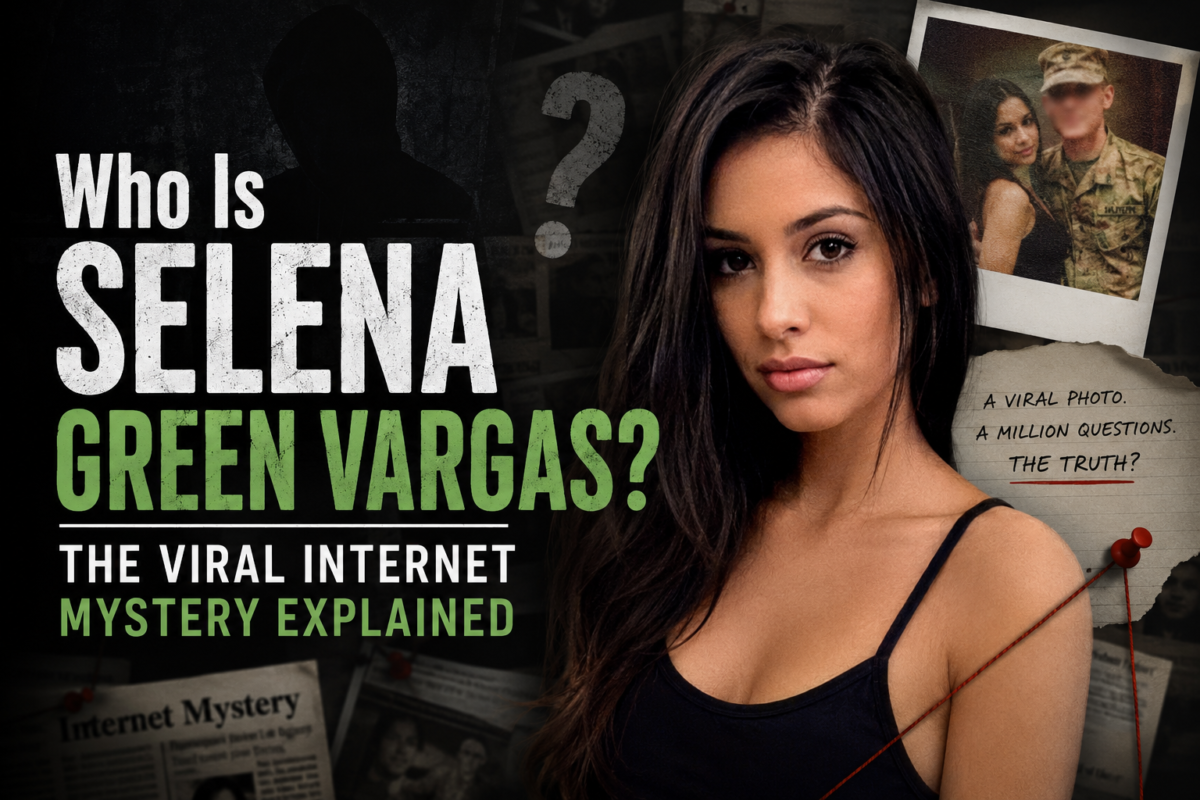
Selena Green Vargas is one of those names the internet refuses to leave behind. She is not a mainstream celebrity, not a Hollywood actor, not a public official, and not someone who built a public brand through interviews, podcasts, reality television, or social media campaigns. Yet her name continues to appear in search bars, forum threads, short-form videos, gossip blogs, and “internet mystery” explainers years after the original controversy that made her recognizable online.
That is exactly why the Selena Green Vargas story matters. It is not just a curiosity about one person. It is a case study in how the internet can transform a single image into a long-running digital legend. A photograph, an anonymous post, a few claims, and thousands of strangers can create a story that outlives the evidence behind it. In that sense, Selena Green Vargas is less a conventional biography subject and more a symbol of the modern internet’s most uncomfortable habits: speculation, exposure, moral judgment, archived rumors, and the permanent afterlife of viral attention.
The public version of her story is usually connected to a 2015 viral image that spread through online communities, especially forums known for anonymous commentary. Over time, the image became attached to allegations, adult-entertainment references, relationship rumors, military-related claims, and questions about where she went afterward. Some websites present these details as established fact, while others frame them as internet folklore. The more responsible approach is to separate what is widely reported from what remains unverified.
To understand who Selena Green Vargas is, the better question is not only “what happened?” It is also “why did this story survive?” Her name remains searchable because the internet rewards mystery, controversy, and unresolved narratives. But behind every viral mystery is a real person, and that fact should shape how the story is told.
The Short Answer: Who Is Selena Green Vargas?
Selena Green Vargas is widely described online as a woman who became the subject of viral attention after a photograph involving her and a man in military-style clothing circulated on anonymous internet forums around 2015. Know Your Meme, one of the better-known archives of internet culture, describes the case as a decade-old viral story that resurfaced repeatedly because users continued discussing allegations surrounding the photograph and her identity.
Much of the public conversation around Selena Green Vargas also links her name to adult entertainment. Several online explainers state that she appeared in adult content before or around the time the photo controversy became widely discussed. However, many details repeated across blogs, including exact biographical claims, personal relationships, location, net worth, and current life status, are either poorly sourced or not independently verified. That distinction is essential.
In practical terms, Selena Green Vargas became famous not because she gave a major interview or launched a public career, but because strangers online turned her into a subject of investigation. Her story sits at the intersection of internet fame, adult-industry stigma, military-image controversy, and digital privacy. For readers searching her name today, the central truth is simple: she became widely known through a viral online controversy, but much of what is said about her remains speculative.
That is why any serious article about Selena Green Vargas should avoid treating rumors as biography. The internet has a habit of compressing uncertainty into certainty. A claim repeated across ten websites can feel factual even if all ten sites are copying the same weak source. The Selena Green Vargas mystery shows how easily this happens.
How the Selena Green Vargas Story Started
The story most commonly associated with Selena Green Vargas begins with a photograph posted online in the mid-2010s. The image reportedly showed a young woman standing with a man wearing military-style clothing. According to many retellings, the person who posted the image presented it in a way that invited strangers to comment on the couple. That is where the story began to shift from an ordinary photo into a viral incident.
Anonymous forum users allegedly began analyzing the image, the uniform, the woman’s identity, and her possible connection to adult content. From there, the conversation expanded into accusations, jokes, speculation, and personal attacks. Some users claimed to recognize her. Others questioned the man’s military presentation. The original context became less important than the collective performance of “solving” the story.
This is a familiar pattern in internet culture. A photograph appears. A forum reacts. Someone claims to have found additional information. Another person screenshots the discussion. Social media accounts repost the claim. Blogs summarize the drama. Years later, new audiences encounter the story as if it were a documented event rather than a layered chain of reposts, assumptions, and anonymous commentary.
In Selena Green Vargas’s case, that process created a durable mystery. People kept asking who she was, whether the viral claims were true, what happened to the man in the image, whether the military angle was real, and why she seemed to disappear from public attention. But the problem with viral mysteries is that they often produce more questions than reliable answers.
The strongest available explanation is that Selena Green Vargas became an internet figure because anonymous users connected her image to provocative claims, and those claims became more viral than any verified biography. Her story did not spread because it was carefully reported. It spread because it had the ingredients the internet tends to amplify: identity, scandal, uncertainty, and a sense that users were uncovering hidden truth.
Why the Story Became So Viral
The Selena Green Vargas story became viral because it combined several powerful online triggers at once. First, it involved an image that appeared personal. Second, it included a military-related angle, which often attracts intense scrutiny online because uniforms, service claims, and perceived authenticity can become emotionally charged topics. Third, it included alleged adult-entertainment connections, which made the story more sensational and exposed it to moral judgment. Fourth, it unfolded in anonymous spaces where people could speculate without accountability.
The internet does not treat all mysteries equally. Stories become persistent when they allow users to play detective. In this case, people were not merely reading a news item; they were participating in a social puzzle. They examined clothing, names, timelines, adult-industry references, and forum comments. Whether or not their conclusions were accurate, the process itself became entertainment.
That is one of the most important lessons from the Selena Green Vargas case. Online audiences often mistake participation for verification. When thousands of people discuss a claim, the volume of conversation can create the illusion of proof. But public attention is not the same as evidence. A viral thread may reveal something true, something false, or something impossible to confirm. The popularity of a claim tells us that people found it compelling, not that it was accurate.
The story also benefited from what could be called the “unfinished ending” effect. Many viral controversies fade once the central person explains themselves, gives an interview, files a public response, or becomes a public figure. Selena Green Vargas did not become highly visible in that way. The absence of a clear public statement left room for endless speculation. In digital culture, silence often becomes a blank screen onto which strangers project theories.
What Is Actually Known and What Remains Unverified?
The most responsible way to discuss Selena Green Vargas is to divide the story into two categories: widely reported claims and unverified details.
It is widely reported that her name became connected to a viral photo controversy around 2015 and that the story was discussed heavily on anonymous forums and later repeated across blogs, social platforms, and internet-culture sites. Know Your Meme has also covered the story as part of broader meme and internet-history documentation, noting that the controversy continued to resurface years later.
It is also widely repeated that Selena Green Vargas had some connection to adult entertainment. However, the way this is discussed online often lacks care. Some sites present invasive biographical details, estimated earnings, measurements, relationship claims, and location rumors without strong sourcing. These claims should be treated cautiously. A person’s appearance in adult content, if true, does not automatically make every detail of their private life public property.
The most uncertain part of the story is her current life. Many articles claim she disappeared from the internet, changed direction, moved elsewhere, retired, or chose privacy. These claims are difficult to verify from reliable public sources. In most cases, they appear to be speculation built around the fact that she has not maintained a highly visible public presence under the name being searched.
That matters because “where is she now?” is one of the most common questions people ask about Selena Green Vargas. The honest answer is that there is no widely verified public update about her current life. Anything more specific should be treated as uncertain unless supported by credible, direct evidence.
The Role of Anonymous Forums in Building the Mystery
Anonymous forums have played a major role in shaping viral internet mysteries. They allow users to post, investigate, accuse, joke, and archive content with fewer social costs than platforms tied to real identities. This can sometimes surface real information, but it can also produce false narratives, harassment, and lasting reputational harm.
The Selena Green Vargas story fits this environment closely. The original controversy is usually traced to forum culture, where users often reward quick discoveries, shocking claims, and aggressive commentary. The incentive is not always truth. Often, the incentive is attention, status within the thread, or the thrill of being first to connect a person to a hidden detail.
This culture creates a serious problem for anyone trying to understand the story years later. The early sources are fragmented. Screenshots may lack context. Deleted posts may be quoted without verification. Later websites may summarize earlier forum comments as if they were confirmed facts. Over time, the chain of evidence becomes weaker even as the story becomes more polished.
In older media systems, a rumor might disappear if newspapers or television ignored it. On the modern internet, a rumor can survive indefinitely through reposts, archives, reaction videos, and search-engine demand. The Selena Green Vargas mystery is a product of that shift. It shows how anonymous speculation can become a permanent digital record, even when the underlying facts remain incomplete.
Selena Green Vargas and the Internet’s Obsession With “Exposing” People
One reason the Selena Green Vargas story still attracts attention is that it reflects a broader internet habit: the desire to expose hidden identities, past actions, or perceived contradictions. Online communities often frame this behavior as truth-seeking. Sometimes it is. But in many cases, it becomes public shaming disguised as investigation.
The language around viral exposure is important. Words like “caught,” “exposed,” “revealed,” and “unmasked” make stories feel dramatic. They also position the subject as someone who deserves scrutiny. In Selena Green Vargas’s case, much of the online discussion has historically carried a judgmental tone, especially around alleged personal relationships and adult-content associations.
That judgment reveals more about internet culture than it does about her. Adult-industry stigma remains powerful. Women in particular are often subjected to harsher scrutiny when their sexuality, relationships, or image become part of a public story. A man in a controversy may be criticized for a specific claim; a woman may be turned into a permanent symbol of the scandal itself.
This is why the Selena Green Vargas case should be understood through the lens of digital ethics. Even when information is publicly accessible, amplification can cause harm. Searching for a name, repeating allegations, or writing about a viral mystery may seem harmless, but those actions contribute to the ongoing visibility of a story that may involve a person who did not seek lasting public attention.
Why People Still Search for Selena Green Vargas
The continued search interest around Selena Green Vargas comes from several overlapping motivations. Some people are curious because they saw her name in a video or meme. Others are trying to understand the original controversy. Some want to know whether the rumors were true. Others are drawn to the mystery of what happened afterward.
Search behavior often follows emotional gaps. When a story has no official ending, people keep looking. The Selena Green Vargas story has no definitive public conclusion, so every new article, video, or forum post becomes another attempt to close the loop. But because many of those posts repeat uncertainty, the mystery continues rather than resolves.
The modern internet also rewards rediscovery. A story from 2015 can become newly popular in 2026 because a creator summarizes it on TikTok, YouTube Shorts, Instagram Reels, Reddit, or X. A younger audience may encounter the story for the first time and assume it is new. That cycle keeps older internet mysteries alive.
This pattern is supported by the scale of today’s digital environment. DataReportal’s Digital 2026 reporting says more than 6 billion people are now online and that social media usage has reached a “supermajority” level globally, creating an enormous audience for revived viral stories. When billions of people participate in online culture, old controversies can be resurfaced endlessly for new audiences.
Old Internet Mystery vs Modern Internet Accountability
The Selena Green Vargas story belongs to an earlier era of internet culture, but it continues to exist in a newer era of platform accountability. That contrast is important.
In the older model, viral stories often spread with minimal moderation, weak privacy protections, and little concern for the long-term impact on the person being discussed. Anonymous forums, repost blogs, and early social platforms rewarded speed and shock. The question was usually “can this be found?” rather than “should this be amplified?”
The modern internet is different, at least in principle. Platforms now face more pressure to address harassment, non-consensual exposure, misinformation, and harmful content. Regulators are also paying closer attention. The European Union’s Digital Services Act, for example, is designed to increase transparency and accountability for online services, including how platforms handle moderation decisions.
That does not mean today’s internet is automatically safer. In some ways, viral exposure is now faster and more visual. Short-form video can revive a rumor in seconds. Search engines can keep old names discoverable for years. AI summaries, automated content farms, and low-quality biography sites can multiply weak claims at scale.
The comparison shows a difficult truth: the tools have changed, but the human appetite for scandal remains. What has improved is awareness. More readers now understand that viral does not mean verified, and more platforms at least claim to take harassment seriously. But the Selena Green Vargas story reminds us that accountability often arrives after the damage has already been done.
The Privacy Problem at the Center of the Story
At its core, the Selena Green Vargas mystery is a privacy story. It raises a hard question: when someone becomes searchable because of a viral controversy, how much of their life should continue to be discussed?
Public interest is not the same as public entitlement. A person may be widely searched without being a public figure in the traditional sense. Selena Green Vargas did not become known through elected office, corporate leadership, major entertainment publicity, or public commentary. Her name became known because online users attached her identity to a controversy.
That distinction matters. The public may be curious, but curiosity alone does not justify invasive speculation. Responsible coverage should focus on the internet phenomenon, the verified timeline, and the cultural lessons rather than attempting to uncover private current details.
The broader data on online harassment shows why this caution is necessary. Pew Research Center reported that 41% of American adults had personally experienced some form of online harassment in its 2020 survey, with more severe forms of abuse also becoming a concern. Viral attention can quickly cross the line from discussion into harassment, especially when a person becomes the target of jokes, accusations, or repeated personal searches.
This is the uncomfortable reality behind many internet mysteries. The audience experiences the story as entertainment. The subject may experience it as a permanent loss of control.
What the Selena Green Vargas Story Teaches About Digital Reputation
Digital reputation is no longer shaped only by what a person says or does publicly. It can be shaped by what strangers attach to their name. That is one of the most powerful lessons of the Selena Green Vargas story.
A single viral moment can become a search identity. When people search a name and repeatedly click controversy-based articles, search engines learn that the controversy is what users want. Content creators then produce more articles around the same angle. The cycle reinforces itself until the person’s name becomes almost inseparable from the viral story.
This creates a serious challenge for anyone caught in a similar situation. Even if claims are exaggerated or false, correcting them can be difficult. Responding publicly may revive attention. Staying silent may allow speculation to grow. Legal action may be expensive or impractical. Platform reporting tools may remove some content but rarely erase the broader narrative.
For businesses, celebrities, creators, and ordinary users, the implication is clear: digital reputation is fragile. The internet does not always reward nuance. It rewards narratives that are easy to summarize. Selena Green Vargas became a searchable mystery because her story was reduced to a few dramatic claims that could be repeated quickly.
That is why media literacy matters. Readers should ask where a claim originated, whether reliable sources confirm it, whether the person has spoken publicly, and whether the article they are reading is adding evidence or simply repeating rumor.
The Business of Viral Mystery Content
There is also a business side to the Selena Green Vargas story. Internet mysteries generate traffic. Traffic generates ad revenue. That creates an incentive for websites to produce articles around names that people search, even when verified information is limited.
This is why many Selena Green Vargas articles look similar. They often promise “the truth,” “what really happened,” or “where she is now,” but then rely on the same recycled claims. Some add speculative details to appear more complete. Others use dramatic headlines to capture clicks. The result is a content ecosystem where certainty is often overstated.
The same pattern appears across many viral names. Once a person becomes a search trend, low-quality publishers rush to create biography-style pages. These pages may include birth dates, locations, career details, relationship claims, and net worth estimates without strong sourcing. Readers should be especially careful with this type of content.
A better article does not need to pretend to know everything. In fact, the most trustworthy approach is to say clearly where the evidence ends. With Selena Green Vargas, the strongest story is not a complete biography. It is the story of how digital culture can turn incomplete information into a permanent public identity.
Benefits and Challenges of Covering Viral Internet Mysteries
There is value in writing about stories like Selena Green Vargas when the focus is responsible. These cases help readers understand how online rumors spread, how digital reputations are formed, and why privacy matters. They also offer a way to discuss broader issues such as harassment, platform accountability, adult-industry stigma, and the ethics of search-driven media.
The challenge is that coverage can also become part of the problem. Every article that repeats a person’s name in connection with controversy contributes to the story’s visibility. Every careless claim can be copied by another site. Every sensational headline can encourage readers to treat a real person as a puzzle rather than a human being.
That is why tone matters. Responsible coverage should avoid mocking the subject, avoid unsupported personal claims, and avoid presenting speculation as fact. It should explain the phenomenon without encouraging harassment or invasive searching.
The Selena Green Vargas story is therefore useful not because it gives readers a neat scandal, but because it forces a more mature conversation about how we consume viral information. The best question is not “how much can we find?” but “what can we responsibly say?”
Where Is Selena Green Vargas Now?
The most honest answer is that Selena Green Vargas’s current life is not publicly verified in a reliable way. Many websites claim she disappeared from public view, stopped appearing online, or chose a private life. Those claims may be plausible, but they should not be treated as confirmed unless supported by direct and credible evidence.
It is also possible that she simply moved on from the identity attached to the viral controversy. Many people who experience unwanted attention reduce their public presence, change usernames, leave platforms, or avoid search visibility. That does not mean the internet is entitled to track them.
For readers, this may feel unsatisfying. Search intent often demands a clear answer. But ethical reporting sometimes requires accepting uncertainty. “No verified public update” is a better answer than inventing a dramatic ending.
In the case of Selena Green Vargas, the lack of a confirmed current profile should be respected rather than treated as another mystery to solve. The public story is about what happened online. Her private life today, unless she chooses to make it public, is not something strangers need to uncover.
The Future of Viral Internet Mysteries
The future will likely produce more stories like Selena Green Vargas, not fewer. The difference is that they may spread faster, become more visual, and involve more automated amplification. AI-generated summaries, reaction content, short videos, and algorithmic recommendations can revive old stories with little context. A name can trend again because one creator packages it for a new audience.
At the same time, the internet is becoming more aware of privacy harms. Regulations such as the Digital Services Act show that governments are pushing platforms toward greater transparency and accountability. Media organizations, creators, and readers are also becoming more cautious about doxxing, harassment, and non-consensual exposure.
The next phase of internet culture will be shaped by this tension. People will continue to be fascinated by mysteries, scandals, and unresolved stories. But there will also be growing pressure to distinguish investigation from harassment and public interest from voyeurism.
The Selena Green Vargas story may remain searchable for years, but its meaning can change. Instead of treating it only as a scandal, readers can treat it as a warning. It shows how quickly online attention can attach itself to a person and how difficult it is to remove once it becomes part of search culture.
Frequently Asked Questions About Selena Green Vargas
Who is Selena Green Vargas?
Selena Green Vargas is a woman who became widely discussed online after a viral photo controversy that is commonly traced to anonymous internet forums around 2015. Her name has also been linked in many online articles to adult entertainment, although many personal details repeated about her remain unverified.
Why did Selena Green Vargas become famous?
She became famous because a photograph involving her and a man in military-style clothing circulated online and triggered widespread speculation. Forum users began discussing her identity, the man’s uniform, alleged relationship details, and her reported adult-content background. The controversy then spread across blogs, social platforms, and meme-history discussions.
Was Selena Green Vargas a public celebrity?
Not in the traditional sense. She was not a mainstream celebrity who built fame through major public appearances, interviews, or entertainment publicity. Her name became widely known because of viral internet attention, which is different from chosen public celebrity.
What happened in the Selena Green Vargas viral photo?
The commonly repeated story says that a photo of Selena Green Vargas with a man in military-style clothing was posted online and then scrutinized by anonymous users. The discussion expanded into allegations and identity claims. However, many details surrounding the original post and later retellings remain difficult to verify.
Is everything online about Selena Green Vargas true?
No. Many articles repeat claims without strong sourcing. Some details may be based on old forum discussions, reposts, or speculation. Readers should be cautious with claims about her personal life, current location, relationships, finances, or exact biography unless they are supported by reliable evidence.
Where is Selena Green Vargas now?
There is no widely verified public information about where Selena Green Vargas is now. Many websites claim she left public attention or chose privacy, but specific claims about her current life should be treated carefully. The most responsible answer is that her current status is not publicly confirmed.
Why do people still search for Selena Green Vargas?
People still search for Selena Green Vargas because the story has the qualities of a persistent internet mystery: a viral image, unresolved questions, controversy, anonymity, and limited verified follow-up. Each new generation of social media users can rediscover the story through videos, forums, and search results.
What is the main lesson from the Selena Green Vargas story?
The main lesson is that viral attention can permanently shape someone’s digital reputation, even when the facts are incomplete. The story shows the risks of online speculation, public shaming, adult-industry stigma, and treating real people as internet puzzles.
Conclusion: The Real Meaning of the Selena Green Vargas Mystery
The Selena Green Vargas story is often presented as a scandal, but its deeper meaning is much larger than one viral photograph. It is a story about how the internet builds legends from fragments. A name appears. A photo circulates. Anonymous users speculate. Blogs repeat the claims. Search engines preserve the association. Years later, people continue asking who she is, even though the most important facts remain limited.
That is why the most responsible answer to “Who is Selena Green Vargas?” must include both information and restraint. She is widely known as the subject of a viral internet controversy connected to a 2015 photo and later online speculation. She is also a real person whose private life should not be treated as public property simply because her name became searchable.
Her story exposes the mechanics of modern digital culture. It shows how quickly curiosity can become investigation, how easily investigation can become harassment, and how permanently search results can attach a narrative to someone’s identity. It also reminds readers that the internet’s version of a person is often incomplete, distorted, or built from repetition rather than truth.
In the years ahead, stories like this will continue to resurface. The platforms will change. The formats will change. The audience will change. But the ethical question will remain the same: when the internet turns a person into a mystery, do we keep digging, or do we learn to look more carefully at why we wanted the mystery in the first place?
Selena Green Vargas remains a viral name because the internet never fully closed the story. Perhaps the better ending is not finding every missing detail. Perhaps it is understanding that not every unanswered question deserves to be pursued.