Donna Gay Glover Biography: The Life Story of Steve-O’s Mother
July 1, 2026
Colby Donaldson Net Worth: Inside the Life, Career, and Earnings of the Survivor Legend
July 4, 2026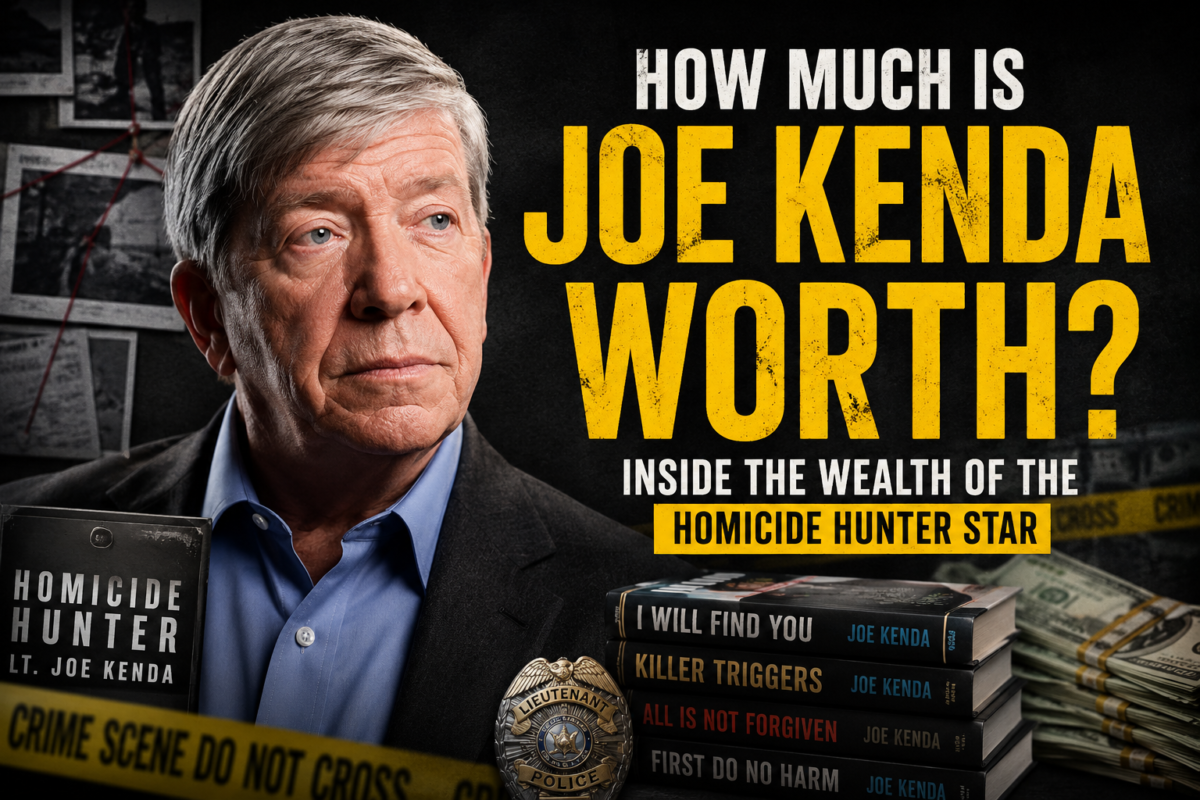
Joe Kenda’s net worth is often discussed with the same fascination that surrounds his television persona: calm, sharp, dryly funny, and built on decades of proximity to the darkest corners of human behavior. Unlike many television personalities whose fame begins in Hollywood, Kenda’s public value was created long before cameras arrived. He first became known as a homicide detective with the Colorado Springs Police Department, where his career in violent-crime investigation gave him the credibility that later turned Homicide Hunter: Lt. Joe Kenda into one of Investigation Discovery’s signature true-crime shows.
As of 2026, Joe Kenda’s net worth is most commonly estimated in the $2 million to $6 million range, though no public financial filing confirms an exact number. The more realistic answer depends on how one values his police pension, television earnings, book royalties, residual income, personal appearances, and the long-term commercial value of his name in the true-crime industry. Entertainment wealth sites frequently publish estimates, but those numbers should be treated as educated approximations rather than audited facts.
What makes Kenda’s financial story interesting is not simply the dollar figure. It is the unusual path behind it. He did not become wealthy through viral celebrity culture, social media influence, or a manufactured reality-TV brand. His earning power came from authenticity. Viewers believed him because he had actually done the work. That credibility became a media asset at a time when true crime was transforming from a niche cable genre into a streaming-era entertainment powerhouse.
To understand Joe Kenda’s wealth, you have to look at the complete arc: the detective, the storyteller, the television host, the author, and the enduring brand built around a man who turned case files into a second career.
Who Is Joe Kenda?
Joe Kenda, born Joseph Patrick Kenda on August 28, 1946, is a retired American police detective best known for his work with the Colorado Springs Police Department and for hosting true-crime television programs based on homicide investigations. He served in law enforcement for more than two decades and retired at the rank of lieutenant. According to biographical summaries, Kenda worked on hundreds of homicide cases and became known for an unusually high case-closure rate, a central part of the public image that later powered his television career.
Before television, Kenda’s professional identity was rooted in investigative work. He joined the Colorado Springs Police Department in the 1970s and spent much of his career handling violent-crime cases. His appeal as a television figure comes from that background. He was not an actor playing a detective; he was a detective explaining how real investigations unfold.
That distinction matters financially. In true crime, credibility is currency. Audiences are drawn to narrators who can explain police procedure, suspect psychology, evidence, motive, and human behavior without making the subject feel artificial. Kenda’s clipped delivery, blunt observations, and memorable catchphrases helped turn him into a recognizable personality, but the foundation was always his law-enforcement experience.
His rise also came at the right cultural moment. Cable networks and streaming platforms discovered that true crime could attract loyal audiences across age groups. Viewers wanted not only sensational stories but also guided interpretation. Kenda became valuable because he could provide both: the drama of a murder investigation and the authority of someone who had lived through the work.
Joe Kenda Net Worth in 2026: A Realistic Estimate
Joe Kenda’s net worth is not publicly confirmed, but most online estimates place it somewhere between $2 million and $6 million. Some celebrity finance websites estimate around $2 million to $4 million, while others suggest a higher range closer to $4 million to $6 million. These figures generally consider his television income, book royalties, police pension, possible residuals, and appearances, but they do not come from official disclosures.
A balanced estimate would put Joe Kenda’s likely net worth around the middle of that range. A figure near $3 million to $5 million is plausible when considering the length of his television career, the continued availability of his shows, his publishing activity, and retirement benefits from public service. However, it would be misleading to present any single number as fact.
The reason estimates vary so widely is that Kenda’s wealth is not built like that of an A-list actor, professional athlete, or publicly traded business founder. There are no disclosed contracts, stock holdings, public salary reports for his media work, or verified real-estate portfolios. Instead, his wealth must be inferred from multiple income streams.
His police career likely provided stability rather than extreme wealth. His television career likely produced the largest jump in income. His books added another layer of revenue and helped extend his personal brand beyond television. Meanwhile, reruns and streaming availability continue to preserve his relevance, even when he is not producing the same volume of new episodes.
In other words, Joe Kenda’s net worth is best understood as the result of long-term credibility converted into media income.
How Joe Kenda Made His Money
Kenda’s income story begins with public service. A career in police work does not usually create celebrity-level wealth, but it can provide a stable salary, retirement benefits, and pension income. Kenda’s law-enforcement years gave him professional authority and a base of financial security.
The larger wealth-building phase came later, when he moved into television. Homicide Hunter: Lt. Joe Kenda premiered on Investigation Discovery in 2011 and ran for nine seasons, totaling 144 episodes. The series centered on Kenda’s recollections of homicide cases from his career, combining interviews, narration, and reenactments.
That kind of long-running cable series can create several forms of income. The host may earn episode fees, contract payments, promotional compensation, and possibly residual or reuse-related income depending on the agreement. While Kenda’s exact salary has not been publicly disclosed, a nine-season run gave him far more earning power than a short-lived television appearance.
The show also created a durable brand. Viewers did not simply watch the cases; they watched Kenda. His personality became the product. That made it possible for him to continue in later programs, including American Detective with Lt. Joe Kenda, later associated with Homicide Hunter: American Detective, where he presented cases from other investigators rather than only his own files. Discovery+ describes the series as featuring disturbing and complex cases from across the country, guided by Kenda’s commentary.
Publishing became another source of income. Kenda authored true-crime nonfiction and later moved into crime fiction. His books include I Will Find You, Killer Triggers, All Is Not Forgiven, and First Do No Harm. His publisher biography emphasizes his background as a retired lieutenant who spent more than twenty years conducting violent-crime investigations.
Books rarely make celebrities rich on their own unless they become major bestsellers, but they can produce meaningful income when tied to a strong television audience. For Kenda, publishing also helped deepen the brand: the detective was not only on screen; he was also on bookstore shelves.
The Role of Homicide Hunter in His Wealth
The most important financial engine in Joe Kenda’s career is almost certainly Homicide Hunter. The show gave him national visibility, long-term name recognition, and a platform that transformed his detective career into a media business.
The series worked because it solved a common problem in true-crime programming: trust. Many crime shows rely heavily on reenactments, dramatic narration, and suspenseful editing. Homicide Hunter had those elements, but it also had Kenda as the steady central voice. His presence made the show feel less like pure dramatization and more like guided testimony.
The format was commercially powerful. Each episode could stand alone, allowing viewers to enter at almost any point. That made the show useful for cable reruns, streaming libraries, and international distribution. A program with more than 100 episodes is especially valuable because networks can schedule it repeatedly and platforms can keep viewers engaged for long sessions.
Kenda’s financial benefit from that success depends on his contracts, which are not public. But even without knowing the exact numbers, the career impact is obvious. A long-running television series gave him income, audience loyalty, bargaining power, and opportunities beyond the original show.
It also changed his public identity. Before Homicide Hunter, Kenda was a retired detective. After it, he became one of the best-known faces in American true-crime television. That kind of transformation can open income streams that do not exist for most retired public servants: book deals, speaking opportunities, interviews, guest appearances, and future television projects.
Television Salary: How Much Did Joe Kenda Make Per Episode?
Joe Kenda’s exact television salary has not been publicly confirmed. This is important because many online net-worth articles make the mistake of presenting guessed episode salaries as fact. Without contract documents or direct confirmation, any specific per-episode figure should be treated carefully.
That said, television income likely became the largest contributor to his wealth. Hosts of successful cable documentary programs can earn widely varying amounts depending on the network, production budget, ownership structure, popularity of the show, and contract renewal terms. A new host on a modest cable series may earn far less than a central personality on a long-running hit. Kenda’s value likely increased over time as Homicide Hunter became closely associated with his name.
The show’s 144-episode run matters. Even a moderate per-episode fee becomes significant across that many episodes. If a host earns income over multiple seasons, renewals, specials, promotional appearances, and later projects, the cumulative effect can be substantial.
However, Kenda was not the owner of a massive entertainment franchise in the way a producer or studio might be. The larger financial upside in television often belongs to production companies, distributors, and networks. Hosts can earn very well, but they do not automatically receive the same long-term economics as the companies that package and sell the show.
This is why a realistic net-worth estimate should be measured, not exaggerated. Kenda likely did very well from television compared with a standard retirement income, but there is no evidence that he earned the kind of money associated with top network celebrities or major streaming stars.
Book Royalties and Publishing Income
Joe Kenda’s books helped turn his television fame into a broader intellectual property brand. His nonfiction work gave fans more of what they valued from the show: direct, unsentimental reflections on murder investigations, criminal behavior, and the psychological toll of violent-crime work.
I Will Find You, published by Center Street, is marketed around Kenda’s real-life experience investigating murder cases during his career. The publisher describes the book as a collection of case stories from his years as a homicide detective and notes his association with Homicide Hunter.
Killer Triggers continued that nonfiction direction, exploring motives and patterns behind violent crime. Later, Kenda expanded into fiction with All Is Not Forgiven and First Do No Harm, crime novels built around the kind of investigative world his audience already associated with him. Listings and publisher descriptions connect these works to his reputation as a former homicide detective and television figure.
Publishing income can come from advances, royalties, audiobook rights, paperback editions, foreign rights, and continued backlist sales. Kenda’s television platform likely made him more attractive to publishers because he brought a built-in audience. Fans of his shows were natural buyers for his books.
Still, book royalties are usually a supporting income stream rather than the main source of celebrity wealth. Unless sales are exceptionally large, they add credibility and supplemental income more than they create a fortune by themselves. For Kenda, books likely strengthened his overall net worth while extending his career beyond the lifespan of any single TV show.
Police Pension and Retirement Benefits
One overlooked part of Joe Kenda’s wealth is his law-enforcement retirement. A long police career can provide pension benefits, health benefits, and long-term stability. While exact pension details are private, his decades of public service likely contribute to his overall financial picture.
This matters because net worth is not just about fame-based income. It is the total value of assets minus liabilities. A reliable pension can reduce financial pressure, support retirement planning, and allow a person to be selective about later work. For Kenda, his pension likely provided a foundation before television income expanded his financial position.
His police background also created the credibility that made the television opportunity possible. In a sense, his first career generated both direct retirement benefits and indirect media value. Without the case experience, there would be no Homicide Hunter persona. Without the persona, there would be no major second career in true crime.
That is the central lesson of Kenda’s wealth: expertise can become economically powerful when it meets the right media format. He did not simply sell fame. He sold judgment, memory, experience, and narrative authority.
Joe Kenda Compared With Other True-Crime Personalities
Joe Kenda occupies an interesting place in the true-crime economy. He is not a celebrity attorney like some legal commentators, not a podcast entrepreneur who built a large independent media company, and not an actor in scripted crime drama. His lane is narrower but highly distinctive: the retired detective as narrator, analyst, and witness to real cases.
Compared with podcast hosts who own their production companies, Kenda may have less entrepreneurial upside. Ownership matters in media. A creator who owns a podcast network, advertising inventory, live tour rights, and subscription revenue can sometimes build a larger fortune than a television host working under contract.
Compared with typical retired detectives, however, Kenda is in a rare category. Very few law-enforcement professionals become nationally recognized personalities with multi-season television shows and book deals. His second career likely made him far wealthier than he would have been through pension income alone.
Compared with actors in crime dramas, Kenda’s value is based less on performance range and more on authenticity. He does not need to play a detective convincingly; he already was one. That gives him a durable niche, especially among viewers who prefer real investigative commentary over fictionalized police drama.
This comparison helps explain why his net worth estimates are respectable but not extreme. He has had a successful media career, but one built around cable documentary programming and publishing rather than blockbuster entertainment ownership.
Why Joe Kenda Became So Marketable
Kenda’s marketability rests on three qualities: authority, voice, and timing.
Authority came from his career. Viewers sensed that he understood homicide investigations from the inside. His comments on motive, deception, fear, and violence carried weight because they came from experience.
Voice came from personality. Kenda’s dry humor, measured delivery, and unsentimental observations made him memorable. In a crowded true-crime marketplace, tone matters. Many programs cover murder; fewer have a host whose manner of speaking becomes part of the show’s identity.
Timing came from the true-crime boom. Over the past decade, true crime moved from cable schedules into podcasts, documentaries, streaming platforms, YouTube channels, and social media discussion. Audiences became more sophisticated, often demanding procedural detail, psychological insight, and moral seriousness. Kenda fit that demand.
His brand also benefited from restraint. He did not present himself as glamorous. He often appeared matter-of-fact, even weary, about the violence he had investigated. That restraint made the show feel more credible and helped separate him from more sensational forms of crime entertainment.
The Challenges Behind the Wealth
Joe Kenda’s financial success came from stories rooted in tragedy. That creates a tension at the center of all true-crime media. The genre can inform, educate, and honor investigative work, but it can also risk turning victims’ suffering into entertainment.
Kenda’s appeal partly comes from the seriousness with which he treats murder. His shows are dramatic, but his persona is not gleeful. He often speaks as someone who understands the emotional cost of homicide work. That matters ethically and commercially. Audiences may be fascinated by crime, but many also want the material handled with gravity.
There is another challenge: the long-term effect of being known almost entirely for violence. Kenda has spoken publicly in various contexts about the impact of homicide work, and the final phase of Homicide Hunter emphasized the personal toll of the cases. His story is not simply a wealth story; it is also a story about trauma, memory, and the cost of professional exposure to human cruelty.
Financially, the challenge is sustainability. Television fame can fade. Streaming libraries can change. Book sales can slow. Public interest can shift to newer personalities and formats. Kenda’s advantage is that his credibility does not expire quickly, but his earning power still depends on audience demand and media availability.
Future Outlook: What Happens to Joe Kenda’s Brand Next?
Joe Kenda’s future earning potential will likely depend less on becoming more famous and more on maintaining relevance within the true-crime ecosystem. He already has the core assets: recognizable name, strong association with homicide investigation, a back catalog of television episodes, and published books.
The true-crime market remains strong, but it is also more competitive than ever. Streaming platforms, podcasts, independent YouTube creators, and documentary studios all compete for audience attention. The next stage of the genre is likely to reward personalities who combine credibility with responsible storytelling.
Kenda is well positioned in that environment because his brand is not built on shock alone. It is built on explanation. He helps viewers understand how investigators think, how small details matter, how suspects behave, and why homicide cases can haunt the people who work them.
There may also be continued value in books, audiobooks, documentary specials, legacy interviews, and curated streaming collections. Even if he appears less frequently on new television projects, his existing body of work can continue attracting viewers who discover true crime through streaming rather than traditional cable.
The biggest future opportunity is legacy positioning. Kenda is no longer just a TV host; he is part of the history of modern true-crime television. As the genre evolves, figures like him may be remembered as bridges between old-school police investigation and the streaming-era appetite for real-case storytelling.
FAQ
What is Joe Kenda’s net worth?
Joe Kenda’s net worth is commonly estimated between $2 million and $6 million, with a realistic midpoint likely around $3 million to $5 million. The exact figure is not publicly confirmed, so any number should be treated as an estimate rather than a verified financial fact.
How did Joe Kenda make his money?
Joe Kenda made his money through a combination of law-enforcement retirement benefits, television hosting, book royalties, and media-related opportunities. His biggest financial boost likely came from Homicide Hunter: Lt. Joe Kenda, which ran for nine seasons and made him a major figure in true-crime television.
Was Joe Kenda rich before television?
Kenda likely had a stable retirement foundation from his police career, but he was probably not wealthy in the celebrity sense before television. His media career significantly increased his earning power by turning his investigative experience into a nationally recognized true-crime brand.
How many seasons of Homicide Hunter did Joe Kenda make?
Homicide Hunter: Lt. Joe Kenda ran for nine seasons and totaled 144 episodes. The show premiered in 2011 and ended in 2020, becoming one of Investigation Discovery’s most recognizable true-crime programs.
Does Joe Kenda still make money from Homicide Hunter?
It is possible that Kenda benefits from continued exposure, reruns, streaming availability, or contract-based reuse arrangements, but the exact terms of his television contracts are not public. Even if direct residual income is limited, the show continues to support his brand and book sales.
What books has Joe Kenda written?
Joe Kenda’s books include I Will Find You, Killer Triggers, All Is Not Forgiven, and First Do No Harm. His publishing career includes both true-crime nonfiction and crime fiction inspired by the investigative world associated with his public persona.
Is Joe Kenda’s net worth higher than other true-crime hosts?
Kenda’s net worth appears strong for a retired detective turned television personality, but it may be lower than true-crime entrepreneurs who own production companies, podcast networks, or major media rights. His wealth is based more on hosting, authorship, and reputation than on owning a large entertainment business.
Why is Joe Kenda so popular?
Joe Kenda is popular because he combines real investigative authority with a distinctive storytelling style. His calm delivery, dry humor, and direct explanations make complicated homicide cases understandable without making them feel artificial. Viewers trust him because his credibility comes from real police work.
Conclusion
Joe Kenda’s net worth tells a larger story about expertise, timing, and the economics of modern true crime. He did not follow the usual celebrity path. He spent decades in law enforcement, retired from police work, and then became famous because television discovered what his colleagues and community already knew: he could explain murder investigations with unusual clarity, confidence, and force.
The most reasonable estimate places Joe Kenda’s net worth somewhere in the low-to-mid seven figures, likely around $3 million to $5 million, though published estimates vary and none should be treated as exact. His wealth appears to come from a blend of police retirement income, television compensation, book royalties, and the long-term value of a trusted media identity.
What separates Kenda from many true-crime personalities is the source of his authority. His brand was not invented in a studio. It was built in interrogation rooms, crime scenes, case files, and years of violent-crime investigation. Television amplified that experience, but it did not create it from nothing.
That is why his financial success feels different from ordinary entertainment fame. Joe Kenda became valuable because he represented something audiences wanted: a guide through chaos who could make sense of the worst human behavior without losing his composure. His wealth is the result of that rare combination—professional credibility, memorable storytelling, and a true-crime market hungry for voices that feel real.
In the end, Joe Kenda’s fortune is not just measured by a net-worth estimate. It is measured by the unusual second life of his career: from homicide detective to television icon, from public servant to author, and from local investigator to one of the most recognizable faces in true-crime history.