What Is Classroom 30x? Complete Guide for Students and Teachers
July 8, 2026
How to Find the Best Ensalada Mixta Near You: A Foodie’s Guide
July 26, 2026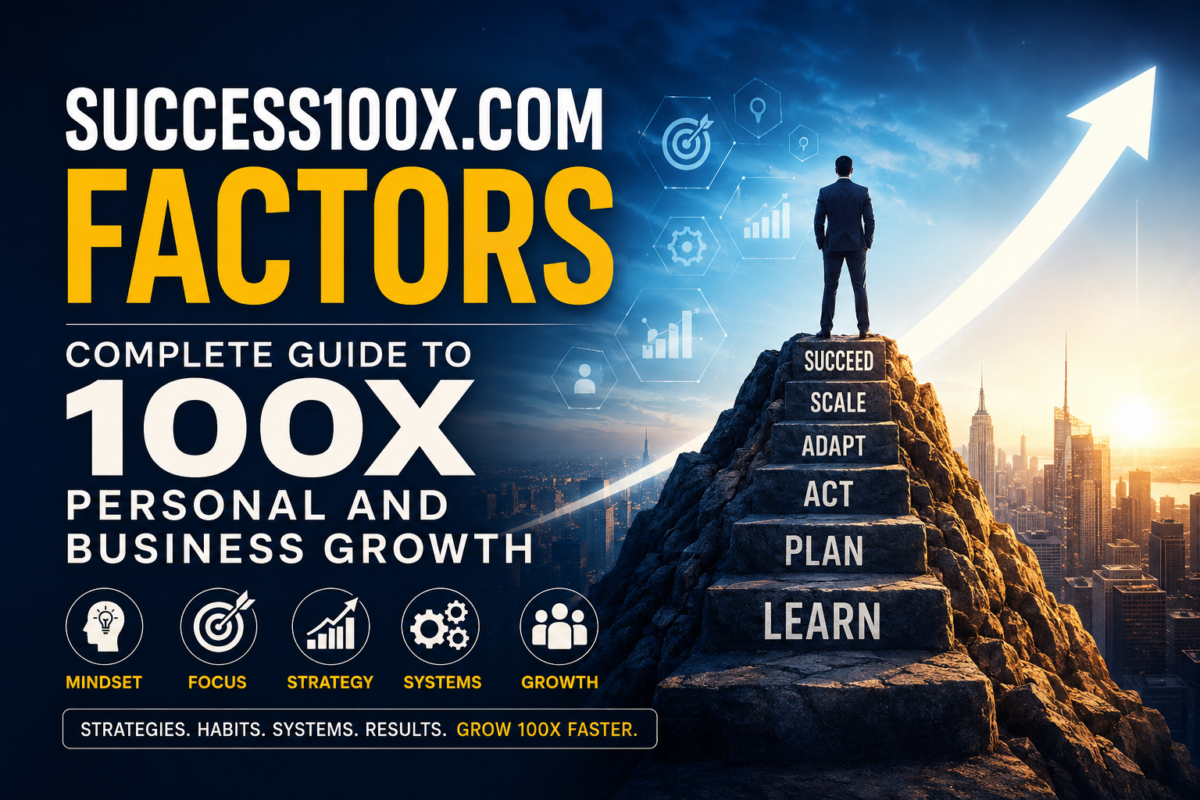
In every generation, the language of success changes. Decades ago, people spoke about hard work, discipline, and patience. Then came productivity hacks, digital entrepreneurship, personal branding, automation, and the promise of scalable income. Today, the conversation has shifted again. People no longer want slow, uncertain progress; they want systems that can multiply results. That is where success100x.com factors enter the discussion.
The phrase points to a larger idea: success is not the result of one lucky decision, one motivational quote, or one burst of energy. It is usually built through a combination of mindset, strategy, habits, execution, learning, relationships, and adaptability. When these elements work together, they create compounding growth. When they are missing, even talented people can stay stuck for years.
The appeal of success100x.com factors is easy to understand. Professionals want faster career growth. Entrepreneurs want scalable businesses. Students want sharper focus. Creators want loyal audiences. Freelancers want stable income. Business owners want systems that do not collapse when they step away. Behind all of these goals is the same question: what actually drives meaningful progress?
The honest answer is that 100x growth rarely happens by accident. It comes from building a life or business around high-leverage principles. In the digital economy, those principles matter more than ever because opportunities move quickly, competition is global, and attention is limited. A person with clarity, discipline, skill, and strong systems can move far faster than someone relying only on ambition.
This guide explores success100x.com factors as a practical framework for personal and business growth. It looks beyond surface-level motivation and examines the deeper forces that shape achievement: how people think, how they make decisions, how they build habits, how they use technology, how they manage risk, and how they turn goals into measurable outcomes.
What Are Success100x.com Factors?
Success100x.com factors can be understood as the core principles, behaviors, systems, and strategic choices that help individuals and businesses create exponential growth. The word “factor” matters because success is rarely caused by a single thing. It is usually the outcome of multiple forces working together. A strong mindset without execution produces ideas but not results. Hard work without direction creates exhaustion. Ambition without measurement becomes confusion. Talent without consistency often fades.
At a practical level, these factors include clarity of vision, goal setting, disciplined habits, continuous learning, high-value skills, smart networking, digital leverage, resilience, and the ability to adapt. For a business, they may also include market positioning, customer understanding, operational systems, brand trust, automation, data analysis, and scalable offers. For personal growth, they may include self-awareness, emotional control, time management, health, focus, and long-term decision-making.
The reason success100x.com factors attract attention is that they speak to a modern frustration. Many people are busy but not progressing. Many companies are active but not truly growing. They post content, attend meetings, launch products, consume courses, and chase trends, yet results remain inconsistent. The missing piece is often not effort. It is structure.
A useful success framework gives people a way to identify which inputs actually matter. It separates productive action from noise. It helps someone ask sharper questions: Am I working on the right goal? Do I have the right skill set? Is my environment supporting growth or distracting me? Am I measuring progress honestly? Do my daily habits match the future I claim to want?
In that sense, success100x.com factors are less about overnight transformation and more about building a repeatable operating system for success.
Why the Idea of 100x Growth Matters Today
The idea of 100x growth can sound exaggerated if it is taken literally in every situation. Not every person will multiply income, productivity, or influence by one hundred. However, the concept is powerful because it forces a different kind of thinking. Traditional growth asks, “How can I improve by 5%?” Exponential growth asks, “What would need to change completely for results to multiply?”
That shift matters in today’s economy. Technology has made leverage available to almost everyone. A freelancer can serve international clients from home. A small brand can reach global buyers through content. A student can learn advanced skills from online platforms. An entrepreneur can automate parts of sales, marketing, customer support, and operations. A creator can build an audience without needing a traditional media company.
But leverage cuts both ways. Because opportunity is open, competition is also intense. People who rely only on old methods often fall behind. The worker who refuses to learn new tools becomes less competitive. The business that ignores digital channels loses visibility. The creator who does not understand audience behavior struggles to grow. The entrepreneur who does not build systems becomes trapped inside daily operations.
This is why success100x.com factors are relevant. They encourage people to think in systems rather than isolated actions. Instead of asking, “How do I work harder?” the better question becomes, “Which actions create the greatest return?” Instead of asking, “How do I stay motivated?” the stronger question is, “How do I design habits and environments that reduce dependence on motivation?”
The modern success landscape rewards people who combine strategic thinking with consistent execution. Growth is no longer only about effort. It is about choosing the right game, building the right skills, using the right tools, and staying adaptable when conditions change.
The Foundation: Mindset, Identity, and Self-Awareness
Every growth system begins with how a person sees themselves. This is not motivational decoration; it is practical psychology. If someone believes they are disorganized, incapable, unlucky, or permanently behind, their decisions often reinforce that identity. They delay action, avoid difficult conversations, quit early, or choose safe goals that do not challenge them. Over time, identity becomes a ceiling.
One of the most important success100x.com factors is developing a growth-oriented identity. This means seeing skills as buildable, failure as information, and discipline as a practice rather than a personality trait. A person who believes they can improve behaves differently from someone who believes ability is fixed. They seek feedback, study patterns, repeat difficult tasks, and stay longer in the learning curve.
Self-awareness is equally important. Many people chase goals they have never examined. They copy someone else’s career path, business model, lifestyle, or definition of success. Then they wonder why progress feels empty. True growth requires understanding strengths, weaknesses, values, emotional triggers, energy patterns, and personal constraints.
For example, an entrepreneur may dream of building a large agency but dislike managing people. A freelancer may want more income but keep accepting low-quality clients because they fear negotiation. A student may claim to lack discipline but actually be struggling with an environment full of distractions. In each case, the problem is not ambition. The problem is a lack of accurate self-diagnosis.
A strong success framework begins by asking uncomfortable but useful questions. What do I repeatedly avoid? Where do I waste the most time? Which habits are silently shaping my future? What skill, if improved, would change everything? What belief is keeping me small?
Without self-awareness, growth advice becomes generic. With self-awareness, success100x.com factors become personal, practical, and powerful.
Clarity: The Difference Between Motion and Progress
One of the biggest reasons people fail to grow is not laziness. It is unclear direction. They move constantly but do not advance meaningfully. They start projects, abandon them, change plans, consume advice, and stay busy, but their actions are not connected to a clear destination.
Clarity is one of the central success100x.com factors because it turns ambition into strategy. A clear goal defines what matters and what does not. It gives daily decisions a filter. It helps people say no to distractions that look attractive but do not serve the mission.
In business, clarity may mean knowing exactly who the customer is, what problem the company solves, why the offer is different, and how success will be measured. Without this clarity, marketing becomes vague, product development becomes reactive, and growth becomes unpredictable. Companies that scale usually have a sharp understanding of their market, their message, and their value proposition.
In personal growth, clarity may mean defining the next stage of life in measurable terms. “I want to be successful” is too vague to guide behavior. “I want to build a freelance income of $5,000 per month within 12 months by specializing in conversion-focused website content” is more useful. It identifies the target, timeline, skill area, and income model.
Clarity also prevents false success. A person can become busy, visible, or praised while still moving away from what they actually want. A business can grow revenue while destroying profit margins. A creator can gain followers without building trust. A professional can earn promotions while losing health and family balance.
The best goals are specific enough to guide action but flexible enough to evolve. That balance is crucial. Too much rigidity creates stress. Too much vagueness creates drift. The role of clarity is not to predict every step; it is to create a strong direction for intelligent action.
Execution: Turning Strategy Into Daily Behavior
Many people understand success principles intellectually. They know they should focus, learn, plan, exercise, save money, build skills, and manage time. Yet knowledge alone does not change outcomes. Execution does.
Execution is where success100x.com factors become visible. It is the bridge between what someone says they value and what their calendar proves they value. A person’s real priorities are not found in their intentions; they are found in their repeated actions.
Strong execution depends on reducing friction. People often fail not because they are incapable, but because their systems are poorly designed. They rely on memory instead of schedules, motivation instead of routines, and willpower instead of environment. A better approach is to make important actions easier and distractions harder.
For example, a writer who wants to publish consistently should not decide every morning what to write. They should keep an editorial calendar, maintain idea notes, create writing blocks, and set publishing deadlines. A business owner who wants better sales should not depend only on random networking. They should build a repeatable pipeline with lead generation, follow-up, proposals, and conversion tracking.
Execution also requires prioritization. Not all tasks are equal. Some activities create high leverage, while others only create the feeling of productivity. Answering emails, redesigning logos, and attending unnecessary meetings may feel responsible, but they rarely produce major growth. On the other hand, improving an offer, building a sales channel, learning a high-income skill, or strengthening customer retention can change the trajectory of a business.
The most successful people and companies are not always doing more. Often, they are doing fewer things with greater consistency and better feedback.
Habits and Consistency: The Compounding Engine of Growth
Success is often romanticized as a breakthrough moment, but most breakthroughs are the delayed result of ordinary actions repeated long enough. Habits are powerful because they reduce the need for constant decision-making. Once a behavior becomes routine, it consumes less mental energy and produces more consistent output.
Among all success100x.com factors, consistency may be the least glamorous and the most important. A person who takes small but focused action every day often outperforms someone who works intensely for a week and disappears for a month. This is especially true in areas like skill development, fitness, content creation, business development, and financial planning.
Consistency creates data. When someone acts regularly, they can measure what works. A creator who publishes weekly learns what topics attract attention. A salesperson who makes daily outreach learns which message converts. A student who studies consistently discovers which methods improve retention. Without consistent action, there is no reliable feedback.
However, consistency should not be confused with blind repetition. Doing the wrong thing every day only compounds inefficiency. Effective consistency combines routine with review. It asks: Is this habit producing the result I want? Should I adjust the method? Is this still aligned with the larger goal?
This is where many people make a mistake. They either quit too early or repeat too long without improvement. The better path is disciplined experimentation. Stay consistent with the goal, but flexible with the method.
In personal and business growth, habits act like invisible architecture. They shape outcomes before results become obvious. By the time success is visible to others, the habit system behind it has usually been operating for months or years.
Skill Building: The Currency of Modern Success
The modern economy rewards people who can solve valuable problems. That makes skill building one of the most important success100x.com factors. Motivation may start the journey, but skill determines earning power, credibility, independence, and opportunity.
High-value skills vary by field, but they usually share certain qualities. They solve urgent problems, create measurable outcomes, and are difficult enough that not everyone can perform them well. In business, these skills may include sales, marketing, leadership, finance, product development, negotiation, data analysis, and strategic communication. In the digital world, they may include coding, design, copywriting, automation, search visibility, paid advertising, video production, and analytics.
Skill building also protects people from economic disruption. When industries change, job titles may disappear, but adaptable skills remain useful. A person who understands communication, problem-solving, customer behavior, and digital tools can move across industries more easily than someone trained only for one narrow task.
The best approach is to build a skill stack rather than rely on one ability. A freelancer who writes well, understands search intent, knows basic analytics, and can communicate with clients has more leverage than a writer who only produces words. An entrepreneur who understands both product and distribution has an advantage over someone who builds silently and hopes customers arrive.
Skill building requires deliberate practice. Watching tutorials is not enough. Reading books is not enough. Real improvement comes from applying knowledge, receiving feedback, correcting mistakes, and repeating the process. The market rewards demonstrated ability, not passive consumption.
Systems, Technology, and Digital Leverage
One of the biggest differences between traditional success and modern success is leverage. In the past, growth was often limited by location, capital, staff, or physical infrastructure. Today, technology allows individuals and small teams to produce results that once required large organizations.
This makes systems and digital leverage essential success100x.com factors. A system is a repeatable process that produces a predictable outcome. Digital leverage uses tools, platforms, automation, and data to multiply effort.
For a business, this might include customer relationship management software, automated email sequences, online payment systems, analytics dashboards, content workflows, project management tools, and artificial intelligence-assisted research. For an individual, it might include calendar systems, learning platforms, budgeting apps, habit trackers, digital portfolios, and automation for repetitive tasks.
The goal is not to use technology for its own sake. The goal is to remove bottlenecks. If a business owner spends hours manually following up with leads, automation can protect revenue. If a creator loses ideas across random notes, a content system can improve output. If a freelancer repeats the same onboarding process for every client, templates and workflows can save time.
However, technology also creates risk. Tools can become distractions. People may spend more time testing apps than doing meaningful work. Businesses may automate broken processes instead of fixing them. The best use of technology begins with strategy. First identify the outcome, then choose the tool.
Digital leverage is powerful because it allows growth without linear effort. A well-built article can attract visitors for months. A strong email sequence can nurture thousands of leads. A useful product can serve customers while the founder sleeps. These are the kinds of systems that make 100x thinking possible.
Relationships, Networks, and Trust
Success is often presented as an individual journey, but in reality, relationships shape opportunity. People hire people they trust. Investors back founders they believe in. Customers buy from brands that feel credible. Mentors shorten learning curves. Communities create accountability. Partnerships open doors that cold effort cannot.
That is why networks are among the most underestimated success100x.com factors. A strong network does not mean collecting random contacts or chasing influential people. It means building genuine relationships based on value, reliability, and mutual respect.
In business, trust reduces friction. A trusted brand spends less effort convincing customers. A respected professional receives referrals. A reliable partner gets invited into better rooms. In careers, relationships can reveal opportunities before they become public. In entrepreneurship, networks can provide feedback, distribution, funding, talent, and credibility.
The mistake many people make is approaching networking transactionally. They reach out only when they need something. Better relationship building starts earlier. Share useful insights. Support others. Keep promises. Make introductions. Communicate clearly. Over time, trust compounds like capital.
The digital world has expanded networking possibilities, but it has also made authenticity more valuable. People are surrounded by noise, pitches, and self-promotion. Those who build real expertise and communicate with honesty stand out.
Ultimately, relationships multiply success because they connect personal growth to collective opportunity. No one achieves meaningful scale entirely alone.
Traditional Success vs Modern 100x Growth
Traditional success models often emphasized stability, credentials, seniority, and gradual progress. A person studied, entered a profession, worked for years, gained experience, and slowly moved upward. That model still exists, and in many fields it remains valid. Doctors, engineers, lawyers, academics, and corporate professionals still depend heavily on formal expertise and structured advancement.
Modern 100x growth operates differently. It rewards speed, adaptability, visibility, distribution, and leverage. A small business can grow through online content. A specialist can build authority through public expertise. A creator can turn attention into income. A software company can scale globally with a relatively small team. A freelancer can earn more by positioning themselves as a premium problem-solver rather than a general service provider.
The difference is not that old principles are useless. Discipline, patience, reputation, and competence still matter deeply. The difference is that modern growth adds new layers. Distribution matters more. Personal branding matters more. Data matters more. Technology matters more. Speed of learning matters more.
Traditional success often asks people to follow a path. Modern success often asks people to design one. That freedom creates opportunity, but it also creates confusion. Without structure, people jump between ideas and call it ambition. Without patience, they quit when results are not immediate. Without ethics, they chase shortcuts and damage trust.
The strongest approach combines both worlds. Use traditional discipline with modern leverage. Build real skills, but distribute them through digital channels. Value reputation, but understand visibility. Practice patience, but measure progress. Respect fundamentals, but adapt to new tools.
That combination is where success100x.com factors become most useful.
Benefits of Applying Success100x.com Factors
The greatest benefit of applying success100x.com factors is that growth becomes more intentional. Instead of reacting to life, people begin designing it. They understand which actions matter, which habits support progress, and which systems need improvement.
For individuals, this can lead to better focus, stronger confidence, improved productivity, and clearer decision-making. When someone knows their goals and builds routines around them, daily life becomes less chaotic. They waste less energy on uncertainty and more energy on meaningful execution.
For entrepreneurs, the benefits can be even larger. A business built around clear positioning, repeatable systems, customer insight, and digital leverage is easier to scale. The owner is less likely to become the bottleneck. Teams work better when processes are defined. Marketing improves when the audience is clear. Sales improve when value is communicated effectively.
For professionals, these factors can improve career growth. A person who builds valuable skills, communicates well, develops relationships, and adapts to industry change becomes more difficult to replace. They are not just doing a job; they are increasing their market value.
Another major benefit is resilience. People with strong systems recover faster from setbacks. If one strategy fails, they review the data and adjust. If one client leaves, they have a pipeline. If motivation drops, habits carry them. If the market changes, learning helps them respond.
The ultimate benefit is not just more achievement. It is more control. Success becomes less dependent on luck and more connected to repeatable behavior.
Challenges, Risks, and Common Mistakes
While success100x.com factors offer a useful growth framework, they should not be treated as magic. The biggest risk is expecting exponential results without sustained effort. The phrase “100x” can inspire people, but it can also create unrealistic expectations if misunderstood.
One common mistake is chasing too many goals at once. People want to improve income, fitness, relationships, skills, confidence, and business growth simultaneously. While all of these may matter, attention is limited. Trying to transform everything at once often leads to shallow effort everywhere. The better approach is sequencing: focus on the highest-leverage area first, then expand.
Another mistake is confusing information with transformation. Many people read articles, watch videos, buy courses, and collect strategies without applying them consistently. Learning feels productive, but it only matters when converted into behavior. A simple plan executed daily beats a complex plan that remains theoretical.
Businesses face similar risks. Founders may chase trends without understanding their customers. They may copy competitors instead of developing a clear value proposition. They may invest in tools before fixing operations. They may pursue growth before building a strong product or service. Fast growth can expose weak foundations.
There is also the risk of burnout. Ambitious people often push hard, ignore rest, and measure their worth only through output. But sustainable growth requires energy management. Health, sleep, relationships, and mental clarity are not distractions from success. They are part of the infrastructure that supports it.
The most effective growth systems are ambitious but grounded. They push progress without ignoring reality.
How to Apply Success100x.com Factors in Daily Life
Applying success100x.com factors begins with an honest audit. Before setting new goals, examine current behavior. Where is time going? Which habits are helping? Which patterns are repeating? What goal has been delayed the longest? What skill would create the biggest improvement?
Once the audit is clear, choose one primary growth target. This target should be specific, measurable, and meaningful. A vague goal creates vague action. A strong goal gives direction. For example, instead of saying, “I want to grow my business,” define the outcome: “I want to increase monthly revenue by 30% in six months by improving lead generation and client retention.”
Next, identify the key factors connected to that goal. If the target is career growth, the factors may include skill development, networking, portfolio building, communication, and industry visibility. If the target is business growth, the factors may include offer improvement, marketing systems, sales process, customer experience, and operational efficiency.
Then translate the goal into weekly behavior. This is where many plans fail. A goal without a calendar is only a preference. Weekly actions might include outreach, learning hours, content creation, sales calls, financial review, customer research, or product improvement. The exact actions depend on the goal, but they must be visible in the schedule.
Finally, review progress regularly. Weekly reviews help identify what is working and what needs adjustment. Monthly reviews reveal patterns. Quarterly reviews allow deeper strategic changes. Growth improves when feedback becomes part of the system.
The process is simple, but not easy. That is why consistency, patience, and honest measurement matter.
Future Outlook: The Next Evolution of Personal and Business Growth
The future of success will be shaped by a combination of human judgment and technological leverage. Artificial intelligence, automation, remote work, creator-led businesses, online education, and global service markets are already changing how people build careers and companies. These shifts will make success100x.com factors even more relevant.
In the coming years, the most successful individuals will likely be those who can learn quickly, communicate clearly, use tools intelligently, and build trust in crowded markets. Technical skills will matter, but so will human skills such as empathy, leadership, creativity, negotiation, and strategic thinking.
Businesses will face a similar reality. Customers will expect speed, personalization, transparency, and strong digital experiences. Companies that understand data, automate wisely, and maintain authentic customer relationships will have an advantage. Companies that rely only on outdated methods may struggle, even if they once had strong reputations.
Personal branding will also become more important. Professionals who publicly demonstrate expertise through writing, speaking, video, or community engagement will create opportunities beyond traditional resumes. Trust will become a form of currency.
At the same time, the future will reward discernment. New tools and platforms will appear constantly. Not every trend deserves attention. The ability to choose wisely may become more valuable than the ability to move quickly.
The next era of growth will not belong only to the loudest, fastest, or most funded. It will belong to those who combine clear thinking, strong execution, ethical value creation, and adaptive systems.
FAQs About Success100x.com Factors
What are success100x.com factors?
Success100x.com factors are the core principles and systems that support personal and business growth. They include mindset, clarity, goal setting, habits, skill development, execution, digital leverage, relationships, resilience, and adaptability. The idea is that meaningful success comes from multiple factors working together rather than one isolated tactic.
Why are success100x.com factors important?
They are important because many people work hard without building real momentum. These factors help create structure. They show which areas need attention and help people move from random effort to intentional growth. For businesses, they can improve strategy, operations, marketing, and scalability. For individuals, they can improve focus, productivity, confidence, and long-term decision-making.
Can success100x.com factors help business growth?
Yes, they can be applied directly to business growth. A company can use these factors to clarify its market position, improve customer understanding, build repeatable sales systems, strengthen branding, automate operations, and measure performance. The result is a business that grows through systems rather than constant guesswork.
Are success100x.com factors only for entrepreneurs?
No. Although entrepreneurs can benefit greatly from them, the same principles apply to professionals, students, creators, freelancers, and anyone trying to improve their life. A student can use them to build better study habits. A professional can use them for career advancement. A freelancer can use them to improve income stability and client quality.
How long does it take to see results?
Results depend on the goal, the person’s starting point, and the consistency of execution. Some improvements, such as better focus or organization, can appear within weeks. Larger outcomes, such as business growth, career change, or major income improvement, usually require months or years of focused effort. The key is to track progress and improve the system over time.
What is the biggest mistake people make with success100x.com factors?
The biggest mistake is consuming the idea without applying it. Many people enjoy learning about success but do not change their daily behavior. Another common mistake is trying to improve everything at once. The best approach is to choose one high-impact goal, identify the most important factors, and execute consistently.
Do success100x.com factors guarantee success?
No framework can guarantee success because outcomes are influenced by market conditions, timing, competition, resources, personal circumstances, and execution quality. However, using a strong framework can significantly improve the chances of success because it helps people act strategically, measure progress, and adapt when things change.
What is the best way to start using success100x.com factors?
The best starting point is self-assessment. Identify your main goal, your current obstacles, and the habits or systems that need improvement. Then choose a small number of high-leverage actions you can repeat weekly. Over time, review results, refine your strategy, and build stronger systems around what works.
Conclusion
The promise behind success100x.com factors is not that success can be reduced to a simple formula. Life and business are too complex for that. Markets change, people change, technology changes, and unexpected challenges appear. But beneath that uncertainty, certain principles remain powerful. Clarity matters. Habits matter. Skills matter. Execution matters. Trust matters. Systems matter. Adaptability matters.
What separates serious growth from wishful thinking is the ability to connect these factors into a practical operating system. A person who understands their goals, builds valuable skills, manages time wisely, uses technology strategically, develops strong relationships, and learns from feedback is far more likely to create meaningful progress than someone relying only on motivation.
The same is true for businesses. Companies do not scale sustainably because they are busy. They scale because they solve real problems, understand their customers, build repeatable systems, protect trust, and adapt faster than the market shifts around them.
The deeper lesson is that 100x growth is not only about doing more. Often, it is about thinking better, choosing better, and designing better. It is about replacing scattered effort with focused execution. It is about building foundations strong enough to support bigger opportunities.
In a world full of noise, shortcuts, and endless advice, success100x.com factors offer a more disciplined way to think about achievement. They remind us that extraordinary outcomes are usually built from ordinary actions performed with unusual clarity, consistency, and courage.