
What Is Uvlack? Meaning, Uses, Benefits, and Applications
July 5, 2026Air France A350 Chicago Flight Return: What Happened and Why It Matters
July 7, 2026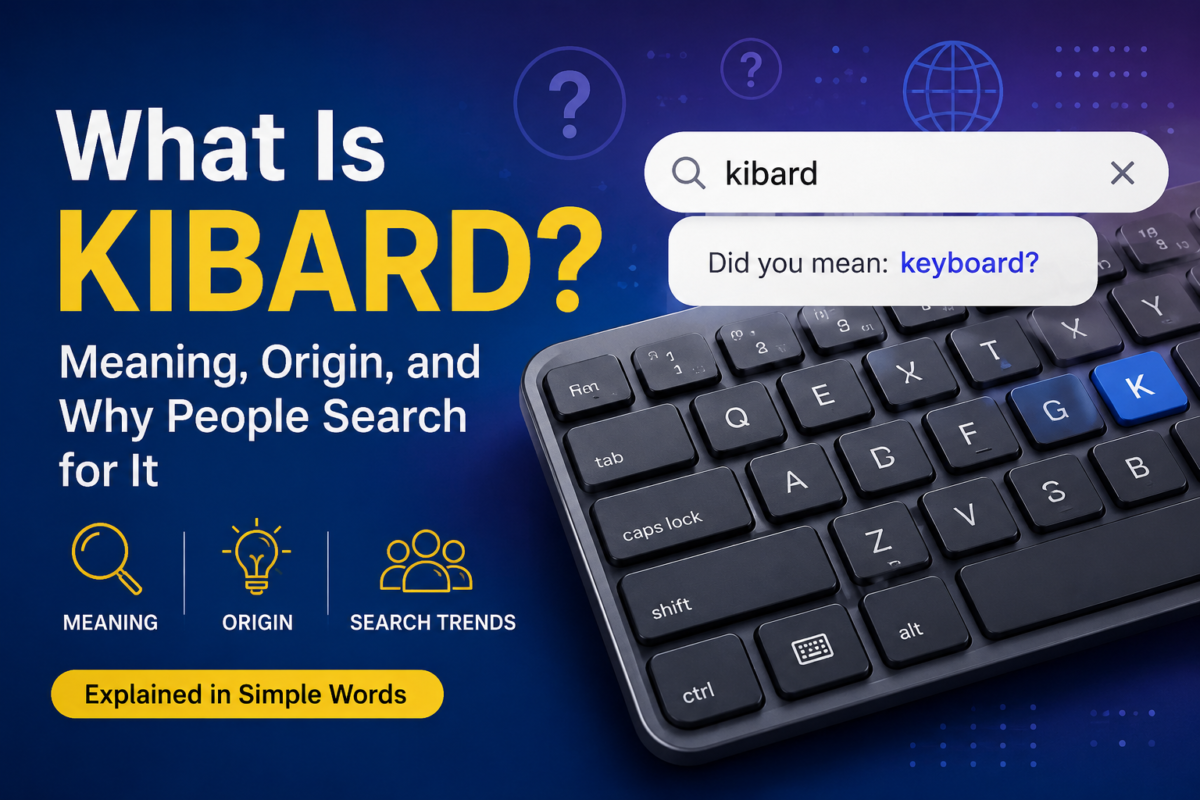
In the digital world, even a misspelled word can tell a bigger story. A term like kibard may look accidental, unfinished, or meaningless at first glance, yet its growing presence in online searches reveals something far more interesting about how people type, search, and interact with technology. Most users who type “kibard” are not looking for a new invention, a software tool, or a hidden technical concept. They are usually trying to write keyboard—the everyday device that sits at the center of modern computing, communication, gaming, work, education, and mobile life.
But the rise of kibard as a searchable term is not just about one spelling mistake. It reflects a broader shift in how language behaves online. People type faster than ever. They search from small mobile screens. They use voice typing, autocorrect, multilingual keyboards, and predictive text systems that sometimes help and sometimes interfere. Search engines, meanwhile, have become sophisticated enough to understand user intent even when the exact word is wrong. That is why a simple typo can become visible, indexed, discussed, and eventually treated as a topic in its own right.
Kibard matters because it sits at the intersection of human error and machine interpretation. It shows how digital behavior creates patterns, how search systems respond to imperfect language, and how ordinary users reveal their real intent through mistakes. In that sense, kibard is more than a misspelling. It is a small but useful window into the way modern people communicate with devices—and how technology has learned to understand us even when we do not type perfectly.
What Does Kibard Mean?
Kibard is most commonly understood as a misspelling of “keyboard.” In practical terms, when someone types kibard into a search engine, they are usually looking for information related to keyboards, keyboard problems, keyboard types, keyboard settings, keyboard apps, or typing mistakes. Several current web results describe kibard as a typo or phonetic variation of keyboard caused by fast typing, autocorrect behavior, or voice-to-text errors.
The word itself does not have an established definition in standard English dictionaries, nor is it widely recognized as a formal technical term. Its meaning comes from usage rather than official language authority. In other words, kibard exists because enough people type it, search it, and publish content around it for the term to become visible online.
This is how many informal digital terms begin. A mistake appears repeatedly. Search engines notice the pattern. Content creators respond to the query. Users click results that seem to answer their confusion. Over time, the error becomes a recognized search phrase, even if it remains incorrect in formal writing.
The closest and most useful meaning of kibard, therefore, is simple: it is a user-generated typo for keyboard. However, the reason it attracts attention is more complex. It demonstrates how modern search no longer depends only on exact spelling. Search systems attempt to interpret what a person likely meant, especially when a query resembles a common word or product category.
That is why searching for kibard often leads to keyboard-related explanations. The system recognizes that the user probably intended keyboard, just as it recognizes many misspelled brand names, product names, medical terms, city names, and technical phrases. The mistake becomes meaningful because the intent behind it is clear.
The Origin of Kibard: A Typo Born From Speed, Sound, and Screens
The origin of kibard is not tied to a single person, company, or invention. It likely emerged organically from repeated typing mistakes. The word “keyboard” contains several letters that can be mistyped when users are typing quickly, especially on mobile screens or compact laptop keyboards. When people rush, they often simplify words phonetically or skip letters that require extra movement.
The transition from “keyboard” to “kibard” makes sense when viewed as a typing behavior. The first part of keyboard, “key,” can be mentally compressed into a sound closer to “ki.” The middle of the word may lose the “ey” structure, and the ending may remain recognizable as “bard.” The result is not random nonsense. It is close enough to the original word for both humans and algorithms to infer the intended meaning.
Mobile typing has made this kind of error more common. On a physical keyboard, a user feels key placement through touch, spacing, and muscle memory. On a phone screen, there is no true tactile boundary between letters. A slight thumb movement can produce a different character. Predictive text may correct the mistake, ignore it, or sometimes replace it with something stranger. Voice typing adds another layer, because speech-to-text tools interpret sound rather than spelling.
The popularity of keyboard apps also contributes to the broader context. For example, Gboard, Google’s keyboard app, promotes features such as glide typing, voice typing, handwriting, emoji search, translation, and multilingual support. These features make typing faster and more flexible, but they also show how the keyboard has evolved from a simple input tool into an intelligent interface. The more complex the typing environment becomes, the more opportunities there are for unusual spelling variations like kibard to appear.
So while kibard may have started as a simple typo, its origin is connected to deeper changes in digital communication: faster input, smaller screens, predictive systems, global language use, and the constant pressure to type quickly.
Why People Search for Kibard
People search for kibard for several reasons, but most fall into one of three categories: confusion, correction, or curiosity.
The first group searches because they typed the word by accident and want to know whether it means something. They may see kibard in their own search history, a document, a message, or a browser suggestion. Since it looks unusual, they wonder if it is a real word, a brand, a technical term, or slang.
The second group is actually looking for keyboard-related help. They may be trying to find a keyboard app, fix a keyboard issue, compare keyboard types, or learn how to change keyboard settings. Their spelling is wrong, but their intent is normal. A person searching “kibard not working” is almost certainly asking why their keyboard is not working. A person searching “best kibard for gaming” likely wants a gaming keyboard.
The third group includes writers, researchers, content creators, and people interested in digital trends. They notice that kibard appears in search results and want to understand why. For them, the keyword becomes a case study in online behavior. It shows how search engines process misspellings and how user mistakes can develop into searchable topics.
This is what makes kibard interesting. It is not important because it is a powerful word by itself. It is important because it reveals the gap between what people type and what they mean. That gap is one of the most important areas in modern search technology, user experience design, and digital communication.
Kibard vs Keyboard: The Real Difference
The difference between kibard and keyboard is straightforward but important. Keyboard is the correct word. It refers to an input device or digital interface used to enter letters, numbers, symbols, commands, and shortcuts into computers, phones, tablets, and other electronic systems. Kibard, by contrast, is an incorrect spelling that usually points back to keyboard.
A traditional keyboard is physical. It has keys arranged in a layout such as QWERTY, AZERTY, or another regional structure. It may connect through USB, Bluetooth, or built-in laptop hardware. It can be mechanical, membrane-based, ergonomic, compact, wireless, or specialized for gaming, programming, design, or office work.
A digital keyboard is software-based. It appears on a touchscreen and may include predictive text, autocorrect, emoji panels, translation, handwriting recognition, swipe input, and multiple language layouts. On smartphones, the keyboard is not just a typing surface; it is a smart layer between the user and the operating system.
Kibard has none of these formal meanings by itself. It does not describe a device category, a layout, or a technology standard. Its value comes from being a close variation of keyboard. Search engines and readers interpret it by context.
This distinction matters because users should not treat kibard as the correct spelling in professional, academic, or technical writing. In an article, product listing, resume, business email, software manual, or support document, keyboard is the correct term. Kibard should only be used when discussing the typo itself, search behavior, or informal digital language.
What Kibard Reveals About Modern Typing Habits
Kibard may seem small, but it points to a major truth: modern typing is no longer slow, deliberate, and limited to desks. People now type everywhere—while walking, commuting, working, studying, shopping, gaming, watching videos, and switching between apps. Speed often matters more than precision.
The result is a culture of “good enough” typing. Users assume that search engines will understand them. They rely on autocorrect to clean up mistakes. They expect apps to predict the next word. This changes the way people write. Instead of carefully spelling every query, they often enter rough approximations and trust technology to interpret the intent.
This behavior has reshaped search. In earlier web systems, exact spelling mattered much more. A misspelled word could lead to poor results or no results. Today, search engines are designed to handle imperfect queries. They analyze similarity, context, popularity, language patterns, and user behavior to determine what the person likely wants.
Kibard is a perfect example of that transition. The user makes a mistake, but the system often still understands. This creates a more forgiving digital environment, but it also changes user expectations. People become less worried about accuracy because the machine compensates.
There is a benefit to that. Search becomes easier, especially for children, non-native speakers, elderly users, people with disabilities, and users typing in a hurry. But there is also a risk. Overreliance on correction systems can weaken spelling habits and create confusion when incorrect terms begin circulating as if they were legitimate alternatives.
The Keyboard’s Role in Digital Life
To understand why kibard attracts search interest, it helps to understand why the keyboard itself remains so important. The keyboard is one of the oldest and most durable interfaces in computing. Even as touchscreens, voice assistants, gesture controls, and artificial intelligence tools grow more advanced, the keyboard remains central because it offers precision, speed, and control.
Writers use keyboards to create articles, scripts, books, and reports. Developers use them to write code. Gamers use them for rapid commands. Designers use shortcuts to speed up creative work. Students use them for assignments, research, and communication. Businesses use them for everything from accounting to customer service.
The keyboard is also deeply personal. People develop preferences for key feel, sound, layout, size, travel distance, switch type, language support, and shortcut behavior. A programmer may prefer a mechanical keyboard with tactile switches. A traveler may want a compact wireless model. A gamer may look for low latency and customizable keys. A mobile user may care more about autocorrect accuracy and multilingual support.
This diversity explains why misspellings like kibard can lead to many different user needs. Someone searching for kibard may want a basic definition, but they may also want help choosing a device, fixing a typing issue, changing language settings, or understanding why their phone keeps making mistakes.
In that sense, kibard is a doorway into a much larger topic: how people interact with machines through text.
How Search Engines Understand Misspelled Words Like Kibard
Search engines have become highly skilled at interpreting misspelled queries. They do not simply match letters. They analyze probability. When a user searches for kibard, the engine compares it with known words, common searches, user behavior, language models, and context. Since “keyboard” is a common word and kibard resembles it closely, the system can infer that keyboard is the likely intent.
This process is not magic. It is based on patterns. If many users type a similar misspelling and then click keyboard-related results, that behavior teaches the system that the misspelled term is connected to the correct one. Over time, the system becomes more confident.
Modern search also looks beyond the word itself. If a query includes phrases such as “kibard app,” “kibard settings,” “kibard not working,” or “gaming kibard,” the surrounding words strongly suggest keyboard intent. The search engine does not need the spelling to be perfect because the context provides meaning.
This matters for users because it makes information more accessible. You do not need to know the exact spelling of every word to find help. It matters for businesses because customer searches are messy. People do not always type product names, services, or technical terms correctly. Companies that understand real user language can create better support pages, product descriptions, and help content.
Kibard is therefore not only a typo. It is evidence of how search has shifted from keyword matching to intent understanding.
Is Kibard a Real Word?
Kibard is not generally recognized as a formal English word. It is best described as an informal misspelling or search variation of keyboard. That does not mean it has no meaning, but its meaning is dependent on context.
Language has always evolved through repeated use. Many words begin informally before gaining broader recognition. However, kibard has not reached that stage in standard language. It remains primarily a mistake, not a proper replacement.
The difference between a typo and an emerging word is stability. A new word usually develops a distinct meaning that cannot be fully replaced by another term. For example, internet slang often survives because it expresses a specific feeling, behavior, or cultural idea. Kibard does not yet do that. It points back to keyboard rather than standing independently.
Still, its online presence is meaningful. Digital language does not require formal approval to become searchable. A word can be incorrect and still generate curiosity. A spelling can be wrong and still reveal useful information about user behavior. That is exactly the case with kibard.
The safest way to use the term is to define it clearly: kibard is a common misspelling of keyboard. Once that is established, the discussion can expand into typing habits, keyboard technology, search behavior, and digital communication.
Common Reasons People Type Kibard Instead of Keyboard
One major reason people type kibard is speed. When users type quickly, especially without looking carefully, they may skip letters, substitute sounds, or compress familiar words. Keyboard is common enough that many people do not think carefully while typing it. Familiar words are often mistyped because the brain recognizes them faster than the fingers execute them.
Another reason is mobile input. Smartphone keyboards are small, and many users type with thumbs. The lack of physical key separation increases the chance of mistakes. Autocorrect may not always fix kibard because it may not understand the intended word in isolation, especially if the surrounding sentence is short.
Voice typing can also produce unusual spelling. If a person pronounces keyboard quickly, unclearly, or with a regional accent, speech recognition may interpret the sound imperfectly. While major voice systems are improving rapidly, they still depend on audio clarity, language settings, and context.
Multilingual typing adds another layer. Many users switch between English and other languages on the same device. A keyboard app may predict words based on the wrong language, causing unexpected outputs. Users who speak English as a second language may also spell words phonetically, which can produce variations like kibard.
Finally, some people search kibard because they saw the term elsewhere. Once a misspelling appears in articles, forums, or search suggestions, curious users search it deliberately. That creates a feedback loop: the more people search the typo, the more visible it becomes.
The Business and Technology Lessons Behind Kibard
For businesses, kibard offers a practical lesson: customers do not always describe problems in polished language. A user looking for support may write “kibard not working,” “wireless kibard problem,” or “phone kibard setting.” If a company’s help center only understands perfect terminology, it may fail to serve real users.
This is especially important in e-commerce, software support, and device troubleshooting. A keyboard seller, for example, may optimize product pages for correct terms such as mechanical keyboard, wireless keyboard, ergonomic keyboard, gaming keyboard, and Bluetooth keyboard. But customer support systems should also recognize misspellings. Otherwise, users may abandon the search or contact support unnecessarily.
Technology companies already account for this through autocomplete, query correction, synonym matching, and support search improvements. The goal is not to encourage wrong spelling but to reduce friction. If a user has a problem, the system should help them even when the wording is imperfect.
Kibard also reflects a broader design principle: interfaces should be forgiving. Good technology does not punish users for small mistakes. It guides them toward the right outcome. This principle applies not only to search engines but also to keyboards, forms, apps, checkout pages, banking platforms, educational software, and healthcare portals.
The future of digital experiences will depend heavily on this kind of understanding. Systems that interpret messy human input accurately will feel easier, smarter, and more trustworthy.
Benefits of Understanding Kibard
Understanding kibard has practical benefits for different audiences. For everyday users, it clears up confusion. If someone sees the word and wonders whether it has a special meaning, the answer is simple: it usually means keyboard, written incorrectly.
For students and language learners, kibard is a useful example of how spelling errors form. It shows the relationship between sound, speed, typing behavior, and digital correction tools. Learning from such mistakes can improve writing accuracy.
For content creators and publishers, kibard reveals how people search in real life. Users do not always use perfect grammar or spelling. They often search the way they think, speak, or type under pressure. Understanding that behavior helps writers create clearer, more helpful explanations.
For businesses, the lesson is even stronger. Customer language should shape support content. If users frequently misspell a product or feature, support systems should still direct them to the right answer. This improves user satisfaction and reduces frustration.
For technologists, kibard is a small example of a larger challenge: natural language understanding. Machines must interpret not only correct words but also mistakes, abbreviations, slang, mixed languages, and incomplete thoughts. The better they do this, the more useful digital systems become.
Limitations, Risks, and Misunderstandings
The biggest limitation of kibard is that it can create confusion if treated as a correct term. A reader who sees the word without explanation may assume it refers to a product, brand, software, or technical concept. That is why clear definition matters.
Another risk is low-quality information. Because unusual search terms can attract attention, many websites publish thin explanations that repeat the same basic idea without adding useful context. This makes it harder for readers to separate genuine insight from recycled content.
There is also a language quality concern. Search engines may understand misspellings, but professional communication still requires accuracy. A job application, client proposal, academic assignment, product manual, or business report should use keyboard, not kibard. Digital forgiveness should not replace careful writing in important contexts.
Finally, there is the risk of overinterpreting the term. Kibard is interesting because of what it reveals about typing and search behavior, but it should not be exaggerated into a major independent concept. Its significance comes from the ecosystem around it: keyboards, search engines, autocorrect, mobile typing, and user intent.
The best interpretation is balanced. Kibard is a typo, but a meaningful one. It is not formally important as a word, but it is useful as a signal.
Traditional Typing vs Modern Typing
Traditional typing was built around physical keyboards, structured training, and deliberate input. People learned finger placement, practiced typing speed, and relied on muscle memory. Accuracy was closely tied to skill. Mistakes were visible, and correction required effort.
Modern typing is more fragmented. People type on laptops, tablets, phones, watches, smart TVs, gaming consoles, and virtual keyboards. They use autocorrect, prediction, voice input, swipe gestures, and multilingual layouts. The user is no longer alone in the typing process. Software participates.
This has changed the meaning of a typing mistake. In the past, a misspelled word was usually just a human error. Today, it may be a human error, a software correction failure, a voice recognition issue, a language setting conflict, or a prediction mistake. The boundary between user input and machine interpretation has blurred.
Kibard belongs to this modern world. It is the kind of typo that becomes visible because typing is fast, search is forgiving, and digital systems are constantly interpreting intent. Traditional typing produced errors too, but those errors did not always become searchable patterns. Modern typing turns errors into data.
This shift has advantages. It makes technology more accessible and reduces the cost of small mistakes. But it also means that digital literacy now includes understanding how machines interpret language. Users need to know when they can rely on correction tools and when they must slow down and be precise.
The Future of Typing and Search Behavior
The future of typing will not eliminate keyboards, but it will continue to transform them. Physical keyboards will remain essential for professional work, coding, writing, gaming, and precision tasks. At the same time, digital keyboards will become more intelligent, personalized, and context-aware.
Future keyboard systems will likely predict intent more accurately across languages, professions, and communication styles. They may adapt to a user’s writing tone, common phrases, industry vocabulary, and error patterns. A person who repeatedly types kibard may see the system automatically correct it to keyboard with greater confidence.
Voice input will also improve, especially as speech recognition becomes better at handling accents, background noise, and multilingual speech. However, voice will not replace typing everywhere. Privacy, precision, editing control, and social context still make keyboards necessary.
Search engines will become even more intent-driven. Instead of simply correcting misspelled words, they will understand the task behind the query. If someone searches “kibard not typing letters,” the system may directly show troubleshooting steps for a keyboard that is locked, disconnected, disabled, or set to the wrong language.
This future creates opportunities and responsibilities. Technology will become more helpful, but users will need to remain aware of accuracy, privacy, and overreliance on automated correction. The best systems will not merely fix errors silently. They will help users understand and control the correction process.
Kibard may remain a small typo, but the forces behind it are shaping the future of human-computer interaction.
Frequently Asked Questions About Kibard
What is kibard?
Kibard is most commonly a misspelling of the word keyboard. People usually type it by accident when searching for keyboard-related information, such as keyboard settings, keyboard problems, keyboard apps, or keyboard types. It is not generally considered a formal English word.
Is kibard the same as keyboard?
No, kibard and keyboard are not technically the same. Keyboard is the correct word for the input device or digital typing interface. Kibard is an incorrect spelling that usually points to keyboard because the two words look and sound similar enough for readers and search engines to understand the intended meaning.
Why do people search for kibard?
People search for kibard because they may have typed it accidentally, seen it online, or wondered whether it has a special meaning. In many cases, they are actually looking for keyboard-related help but entered the wrong spelling.
Is kibard a real technical term?
Kibard is not widely recognized as a real technical term. It does not refer to a specific device, software category, keyboard layout, or computing standard. Its main meaning comes from being a common typo or informal variation of keyboard.
Why does a search engine understand kibard?
Search engines understand kibard because they analyze user intent, spelling similarity, search history patterns, and surrounding words in a query. Since kibard closely resembles keyboard, and many related searches involve keyboard topics, the system can infer what the user likely meant.
Can I use kibard in professional writing?
No, it is better to use keyboard in professional writing. Kibard should only be used when discussing the typo itself. In business documents, articles, academic writing, product descriptions, and technical guides, keyboard is the correct and appropriate spelling.
What causes typing mistakes like kibard?
Typing mistakes like kibard are often caused by speed, mobile keyboard limitations, thumb typing, autocorrect issues, voice-to-text errors, multilingual input settings, or simple lack of attention. The mistake is understandable because users often type familiar words quickly without checking every letter.
Will keyboards become obsolete in the future?
Keyboards are unlikely to disappear completely. Voice input, gesture control, and predictive systems will continue to improve, but keyboards remain valuable for precision, privacy, professional work, coding, writing, gaming, and editing. The keyboard may evolve, but it will likely remain a core input tool for years to come.
Conclusion
Kibard may begin as a mistake, but it tells a surprisingly rich story about modern digital life. At the simplest level, it is a misspelling of keyboard. That explanation is enough for anyone who only wants to know what the word means. Yet the reason people search for it—and the reason search engines understand it—reveals something larger about the relationship between humans and technology.
We now live in an environment where typing is constant, fast, mobile, multilingual, and often assisted by software. Mistakes are no longer isolated errors on a page. They become search queries, data patterns, correction signals, and sometimes full topics of discussion. A word like kibard shows how easily human imperfection becomes part of the digital record.
It also reminds us that technology is becoming more forgiving. Search engines, keyboard apps, and predictive systems increasingly understand what users mean, not just what they type. That is a major advancement in accessibility and usability. It helps people find answers even when spelling, language, or device limitations get in the way.
Still, accuracy matters. Kibard should not replace keyboard in proper communication. The value of the term is not that it introduces a new word, but that it exposes how language behaves under the pressure of speed, screens, and intelligent machines.
In the end, kibard is a small typo with a larger message: the future of digital communication will be shaped not only by perfect commands, but by imperfect human input—and by the systems smart enough to understand it.